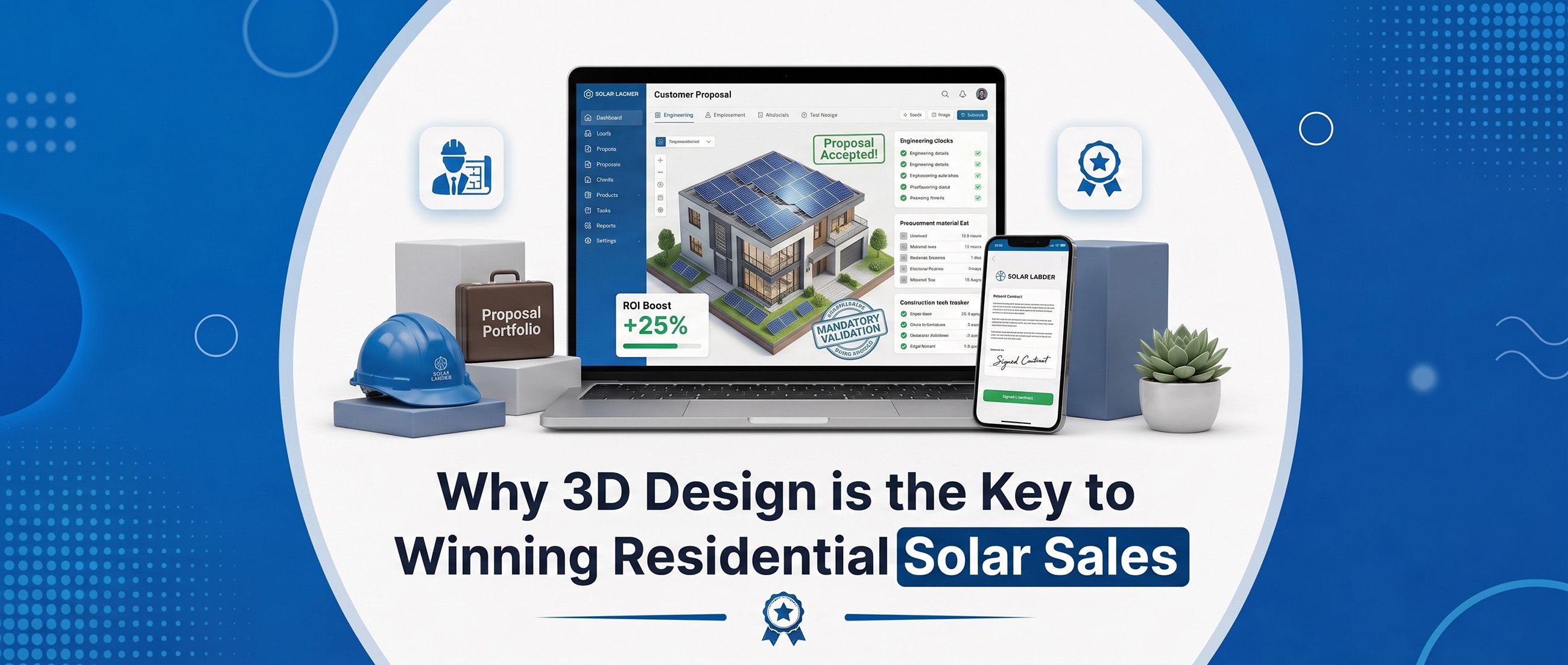
TL;DR 3D solar design helps EPCs win residential solar sales by shifting the conversation from price to value. With accurate rooftop visuals, shading analysis, and ROI projections, installers can build trust, reduce customer doubts, avoid costly change orders, and close deals faster by proving expertise instead of competing only on price.
What is Solar Design Software?
In simple terms, solar design software is a specialized digital tool used by engineers and sales teams to create a blueprint of a solar power system. It allows you to:
- Place panels on a virtual roof.
- Simulate energy production based on local weather data.
- Calculate the financial return on investment (ROI).
- Perform 3D shading analysis to see exactly where shadows will fall throughout the year.
Modern 3D solar design software takes this a step further by creating a "digital twin" of the home, ensuring the design is not just a drawing, but an accurate engineering model.
The "Red Ocean" of Residential Solar
The residential segment is facing extreme competition. With hundreds of local installers entering the fray every month, most customers now collect 4–5 different quotes before making a decision.
In this environment, if your proposal looks like everyone else's (a simple PDF with a price), you will be forced to lower your margins just to stay in the race.
Standing Apart with 3D Visualization
While competitors are showing 2D top-down sketches that look like flat maps, you can stand out by showing the customer exactly what their home will look like.
- Visual Trust: A 3D model feels "real." It shows the homeowner you have actually studied their specific roof, not just copied a template.
- Professional Edge: Using 3D software signals that your company is tech-forward and detail-oriented.
- Obstacle Accuracy: In India, showing a water tank or a neighbor’s tree casting a real shadow on their roof proves your expertise.
Improving Your Conversion Rate
Data shows that EPCs using 3D proposals see a significant jump in their conversion rates. Why? Because it removes the "fear of the unknown."
- Faster Decisions: When a customer can see the panels and the shadow movements, they stop worrying about "will it work?" and start asking "when can we start?"
- Emotional Connection: Seeing a digital version of their own home with a sleek solar system creates a sense of ownership before they even pay.
Win on Ability, Not Just Price
The biggest benefit of 3D design is that it moves the conversation away from "who is the cheapest?"
A detailed solar proposal with a 3D layout allows you to explain why your design is better. You can show that by avoiding a specific shadow zone, your system will produce 10% more energy than the "cheaper" competitor's design. You win the project because you are the most capable, not the most discounted.
Beyond the Sale: Additional Benefits
- Zero Change Orders: Because the 3D design is accurate, your installation team won't find "surprises" on day one.
- Bankability: High-quality 3D reports are much easier for banks to approve for rooftop solar financing. Escpecially for Commercial and Industrial Solar Projects.
- Transparency: Showing a year-round shadow simulation proves you aren't hiding anything about the system's performance.
Conclusion: Use the Best Software for the Job
If you are looking for the best software for residential solar design, you need a tool that is fast and mobile-ready. Solar Ladder allows you to generate these high-converting 3D proposals in minutes, right from your mobile device.
Ready to stop competing on price and start winning on value? Try Solar Ladder today and see how 3D design transforms your sales pipeline.