TL;DR: Solar Ladder delivers PVSyst-level accuracy with an average generation difference of just 1.89% across 8 diverse solar projects in India. Tested from 5 kW rooftops to 2.2 MW utility plants, it combines high-precision generation forecasting, 3D shading analysis, and faster proposal workflows—giving EPCs both speed and bankable confidence.
Results
Quick Overview
- No of Sites Compared: 8 Sites
- System Sizes Compared: 5 kW to 2.2 MW
- PVSyst Vs SL Average Difference: 1.89%
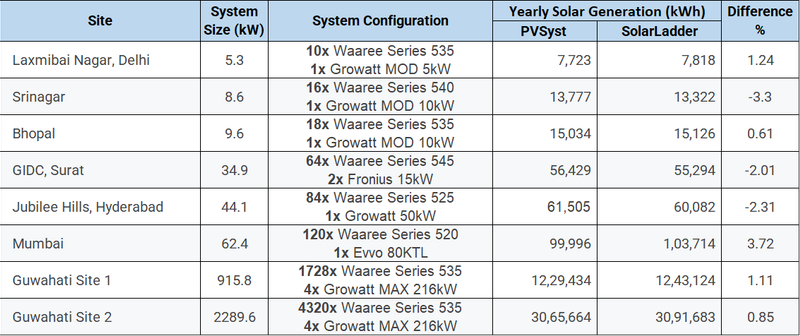
When we looked at the overall differences between the two tools, the average variation was around 1.89%. This level of difference is normal when two independent models are used to estimate solar generation. Even in the most extreme cases we observed, the difference stayed within ±3.7%, with no unexpected or unstable results.
Detailed Comparision
Location 1: Delhi — Residential Rooftop
For our first validation site, we chose a classic urban challenge: a residential rooftop in the heart of Delhi. This site represents the most common installation type in India—a multi-story home featuring a South-East facing panel orientation.
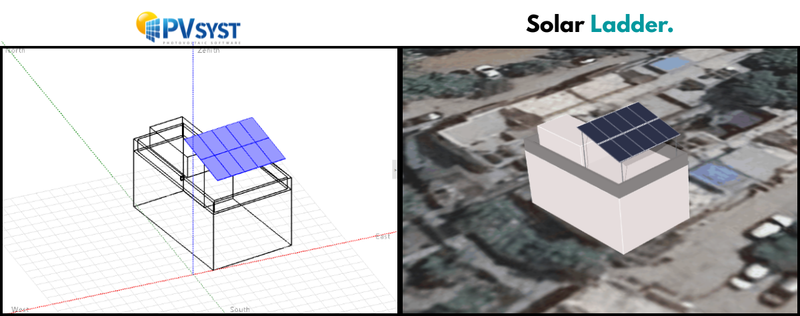
- Engineering Focus: Small Residential Rooftop with no Shading
- Project Size: 5.3 kW
- Panel: Waaree AHANY Series 535 | Qty: 10 Nos
- Inverter: Growatt MOD 5kW | Qty: 1 Nos
- Final Yearly Difference: 1.24%
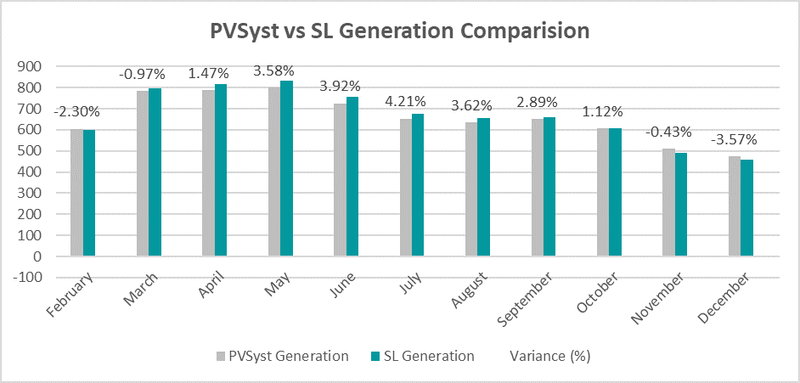
Location 2: Mumbai — Industrial Rooftop
This 62.4 kW South-East facing metal shed sits in a high-density industrial zone near the coast. This location provided a rigorous test of "External" vs "Internal" shading factors.
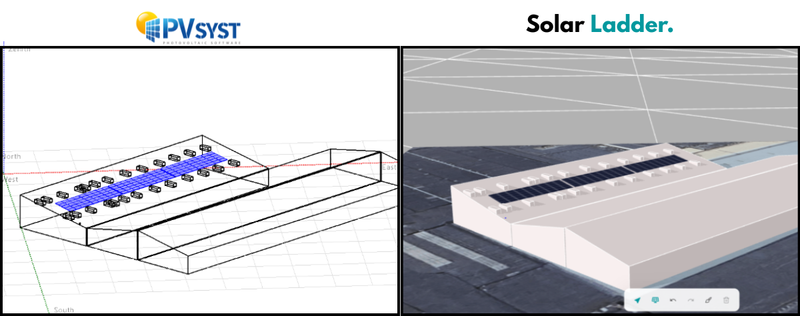
- Engineering Focus: This site tested our engine’s ability to model complex Horizon Shading from a taller adjoining shed and the cumulative impact of "rooftop objects" like vents and skylights.
- Project Size: 62.4 kW
- Panel: Waaree Series 520 | Qty: 120 Nos
- Inverter: Evvo 80KTL | Qty: 1 Nos
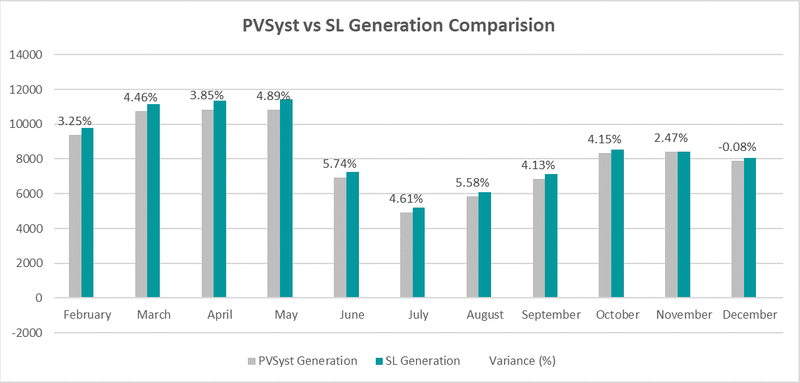
- Final Difference: -2.00%
Location 3: Surat — Industrial Rooftop
Surat’s industrial landscape is dominated by large-scale metal sheds. For this South-facing 34.9 kW installation.
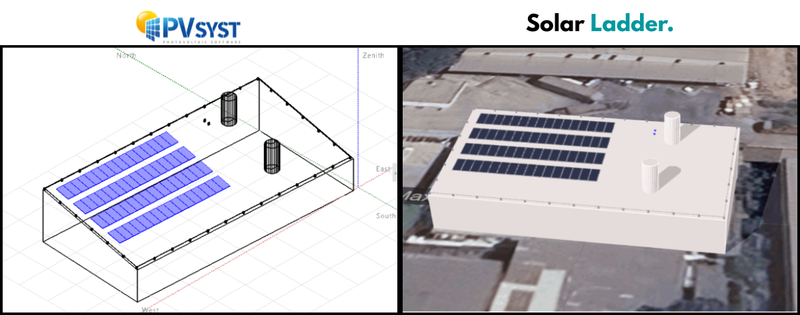
- Engineering Focus: This site features two large cylindrical towers. Unlike rectangular buildings, cylinders cast complex, moving shadows that change shape throughout the day.
- Project Size: 34.9 kW
- Panel: Waaree AHANY Series 545 | Qty: 64 Nos
- Inverter: Fronius 15kW | Qty: 2 Nos
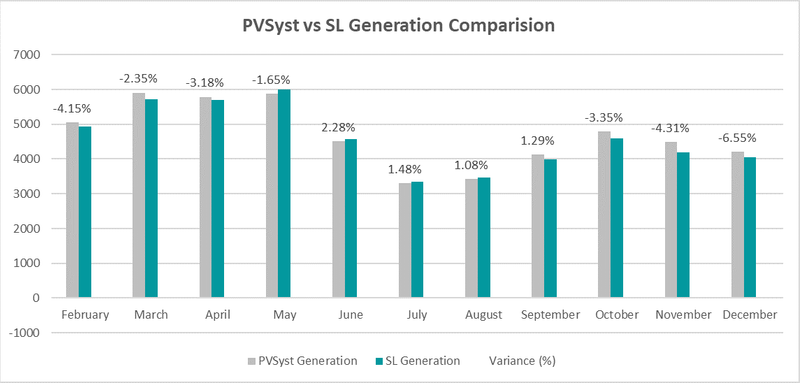
- Final Difference: -2.00%
Location 4: Hyderabad — Complex Commercial Rooftop
This site is a textbook "Urban Commercial" model—a 44.1 kW system designed with South-West facing panels arranged in dense rows. This is an ideal test case for "Typical City" installations found across India.
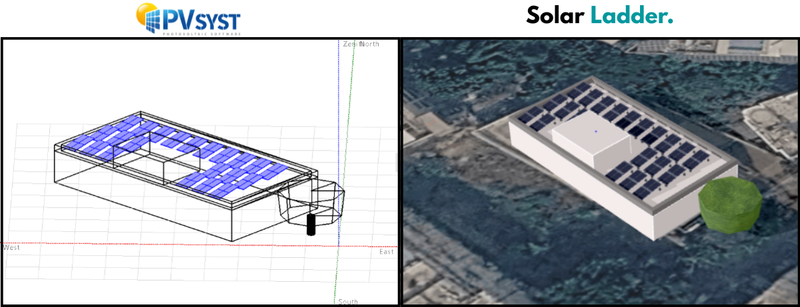
- Engineering Focus: This site tested our engine’s ability to model inter-row (self-shading) losses during low-sun angles and the complex shadow interactions from a lift structure, central water tank, a nearby tree, and surrounding parapet walls.
- Project Size: 44.1 kW
- Panel: Waaree AHANY Series 525 | Qty: 84 Nos
- Inverter: Growatt 50kW | Qty: 1 Nos
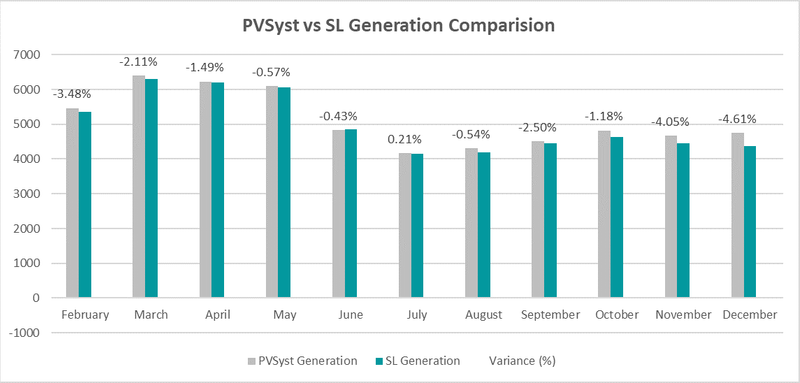
- Final Difference: -2.31%
Location 5: Bhopal — Residential Rooftop from Central India
This site validates our engine's performance in the central Indian climate, featuring a high-capacity residential setup with a clean, unobstructed layout.
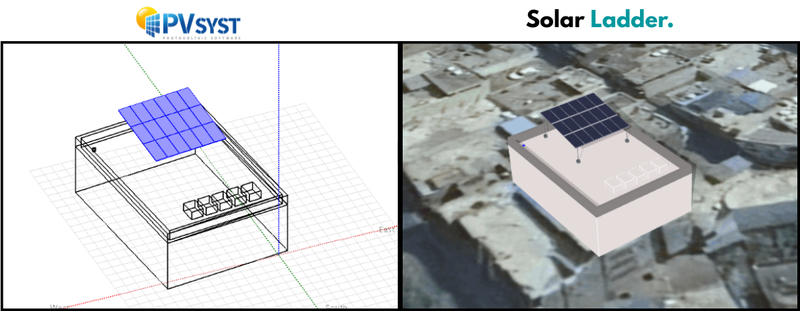
- Engineering Focus: The project features a straightforward pergola-style structure with panels in a 3x6 portrait orientation. This large, single elevated table design maximizes space while ensuring zero shadow interference, providing a "best-case" scenario for verifying the engine's core irradiance-to-energy conversion logic without shading losses.
- Project Size: 9.6 kW
- Panel: Waaree AHANY Series 535 | Qty: 18 Nos
- Inverter: Growatt MOD 10KTL | Qty: 1 Nos
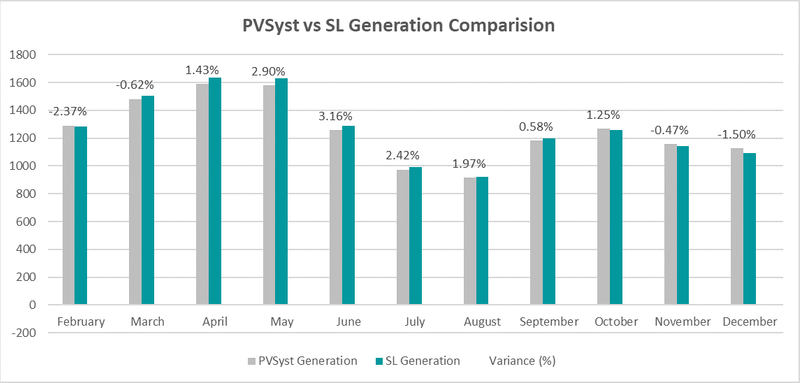
- Final Difference: 0.61% (Solar Ladder vs. PVSyst)
Location 6: Guwahati — MW-Scale Ground Mount
Moving into utility-scale territory, this ~1 MW project acts as a rigorous test for complex stringing arrangements and multi-inverter synchronization.
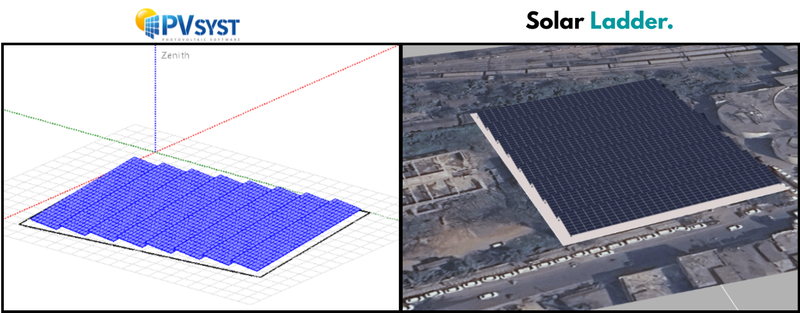
- Engineering Focus: This large-scale validation specifically tests the engine's ability to handle inter-row shading across massive arrays. It verifies the accuracy of string-level calculations involving multiple high-capacity inverters, ensuring that electrical losses across extensive DC cabling are correctly modeled for industrial-grade bankability.
- Project Size: 915.8 kW
- Panel: Waaree 535 | Qty: 1728 Nos
- Inverter: Growatt MAX 216 KTL | Qty: 4 Nos
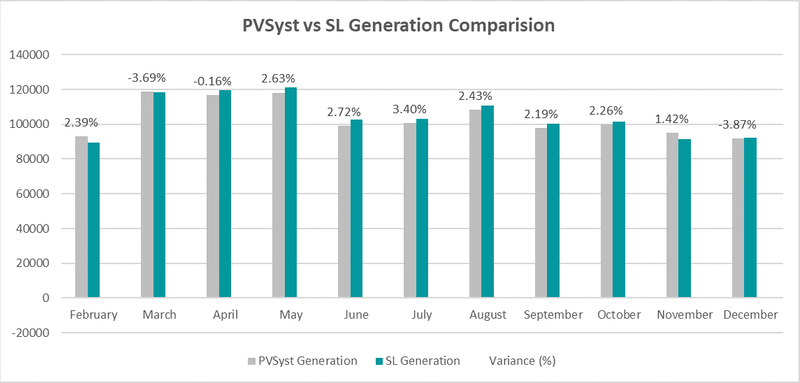
- Final Difference: 1.11%
Location 7: Guwahati — Utility Scale (2.2 MW)
Our largest validation site to date, this 2.2 MW project tests the engine’s performance at a massive scale with significant localized obstructions.
- Engineering Focus: This site features 10 inverters and complex dynamic shading caused by a large tree located in the center of the project. Our engine had to precisely model how this tree's moving shadow affects specific strings throughout the day, layered on top of the standard row-to-row shading found in utility-scale layouts.
- Project Size: 2289.6 kW
- Panel: Waaree 535 | Qty: 4320 Nos
- Inverter: Growatt MAX 216 KTL | Qty: 10 Nos
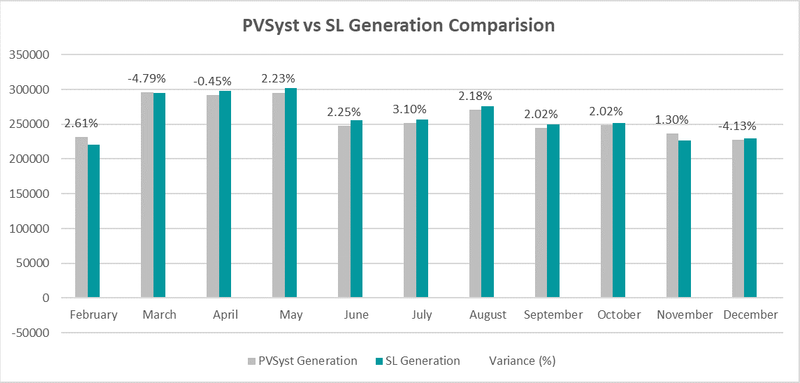
- Final Difference: 0.85% (Solar Ladder vs. PVSyst)
Location 8: Srinagar — Residential Rooftop
Validation in the unique solar climate of Jammu and Kashmir, focusing on high-latitude shadow patterns and residential structural obstructions.
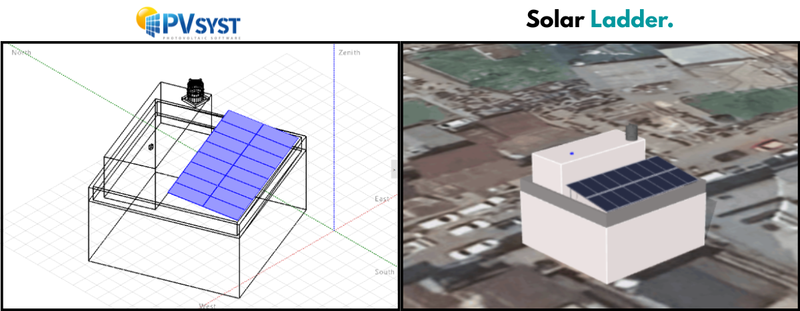
- Engineering Focus: This site tests hard shading scenarios common in dense residential areas, specifically the persistent shadows cast by an upper floor and a rooftop water tank. The engine proved its accuracy in modeling these significant localized losses, which can otherwise lead to system underperformance if not correctly mapped.
- Project Size: 8.6 kW
- Panel: Waaree 540 | Qty: 16 Nos
- Inverter: Growatt MOD 10 KTL | Qty: 1 Nos
- Final Difference: -3.30% (Solar Ladder vs. PVSyst)
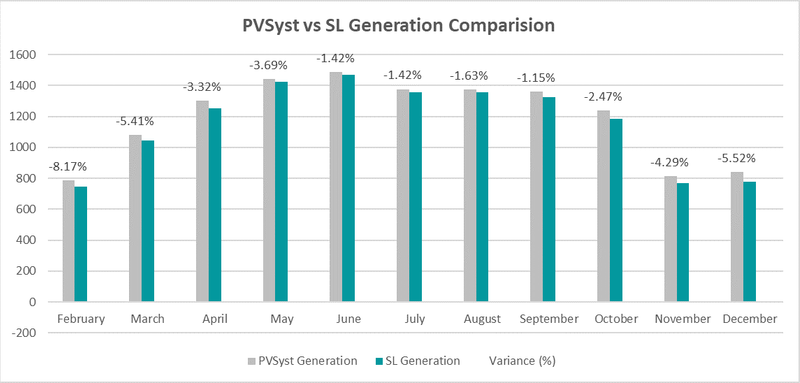
Conclusion: Bankable Estimates for the Indian Solar Frontier
The results of this 8-site validation study confirm a clear reality: the SolarLadder Generation Engine is no longer just an alternative—it is a high-precision tool calibrated for the unique technical challenges of the Indian market.
By maintaining an average variance of just 1.89% compared to PVSyst, our engine bridges the gap between the exhaustive depth of legacy software and the modern need for speed and agility. Whether you are modeling a 5.3 kW residential rooftop in Delhi with complex tank shadows or a 2.2 MW utility-scale project in Guwahati with multi-inverter stringing, SolarLadder delivers results that align with the world’s most trusted benchmarks.