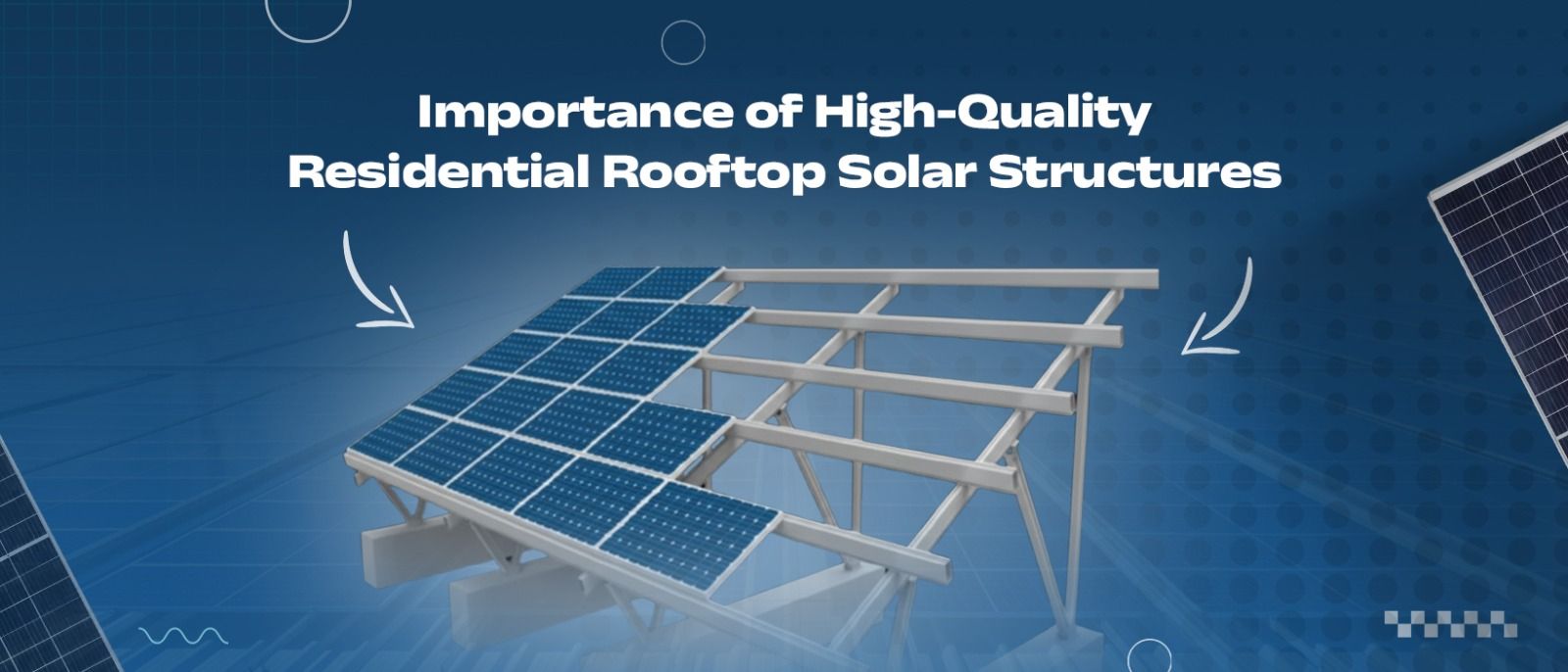
The Backbone of Your System: Why Solar Structure Quality Matters
When planning a solar installation, it is common to focus on the efficiency of panels and inverters. However, the rooftop solar structure is the most critical component for ensuring the physical safety and longevity of your investment. A poorly designed frame can lead to corrosion, roof leakage, or structural failure during high winds.
1. Durability That Matches Your Panels (25+ Year Life-Span)
Solar panels are built to last over two decades, and your solar structure must be able to keep up. Standard site-fabricated structures often use untreated steel that begins to rust within a few years.
- Superior Materials: High-quality structures use Hot-Dip Galvanized (HDG) steel and Galvalume.
- Corrosion Resistance: These materials provide a protective barrier against moisture and salt, ensuring the structure remains stable for over 25 years.
- No Maintenance: Unlike painted steel, which requires regular repainting to prevent rust, engineered HDG structures are virtually maintenance-free.
2. Reclaim Your Roof with Elevated Solar Structures
One of the biggest concerns for residential customers is losing the use of their rooftop. Low-rise structures often turn a beautiful terrace into a "dead zone".
- Maximize Space:Elevated solar structures with a minimum height of 6.5 feet allow you to walk freely underneath the panels.
- Functional Rooftops: This elevation ensures you can still use your roof for leisure, gardening, or cleaning, effectively doubling the utility of your space.
3. Engineering for Extreme Weather
A solar structure acts like a giant sail; if not engineered correctly, high winds can rip panels off the roof.
- Wind Rated: Professional-grade structures are designed to withstand wind speeds of up to 150 km/h.
- Strict Compliance: Reliable structures follow MNRE guidelines and international standards (like IS 875-III for wind loads), ensuring they are safe for your family and your property.
- Weight Distribution: Modern designs are engineered to be lightweight yet heavy-duty, minimizing the "dead load" on your building's roof.
4. Faster, Safer Installation
Traditional site-built structures involve days of cutting, welding, and painting on your roof, which can damage your waterproof coating and create a fire hazard.
- Precision Pre-Fabrication: Modern structures are pre-engineered and arrive ready to bolt together.
- Minimal Disruption: A professional pre-fabricated system can be installed in just hours compared to the 72+ man-hours required for site-built versions.