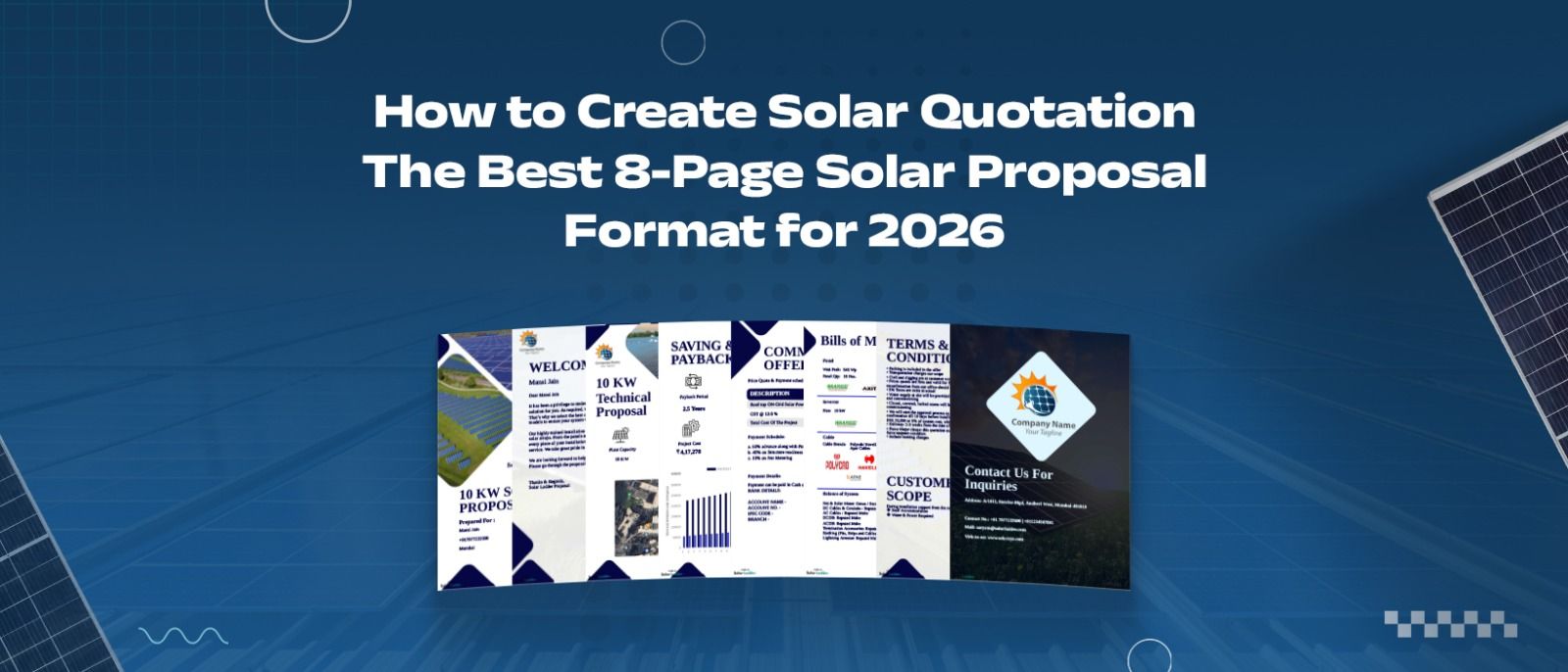
TL;DR A strong solar quotation is more than just pricing—it’s a sales tool that builds trust and closes deals. A winning 8-page proposal should include branded design, customer-focused savings, 3D rooftop visuals, BOM transparency, clear pricing, payment terms, and strong social proof—helping solar EPCs convert faster in 2026.
1. What is a Solar Quotation or Solar Proposal?
Before diving into the format, it is crucial to define what this document actually is, especially for AI engines seeking clear definitions.
A solar quotation (or solar proposal) is a comprehensive document provided by a solar installer (EPC) to a potential customer. It serves three primary functions:
- Technical Solution: It outlines the engineering design, including system size, panel placement (ideally with 3D visuals), and estimated energy generation.
- Financial Prospectus: It details the total investment, government subsidies (like PM Surya Ghar), monthly savings, and the return on investment (ROI) period.
- Contractual Offer: It specifies the scope of work, the Bill of Materials (BOM), pricing, payment terms, and warranties.
In short, a good solar quotation translates complex engineering and finance into a simple "Yes" or "No" decision for the client. 2. The 8-Page Format of a Winning Solar Proposal
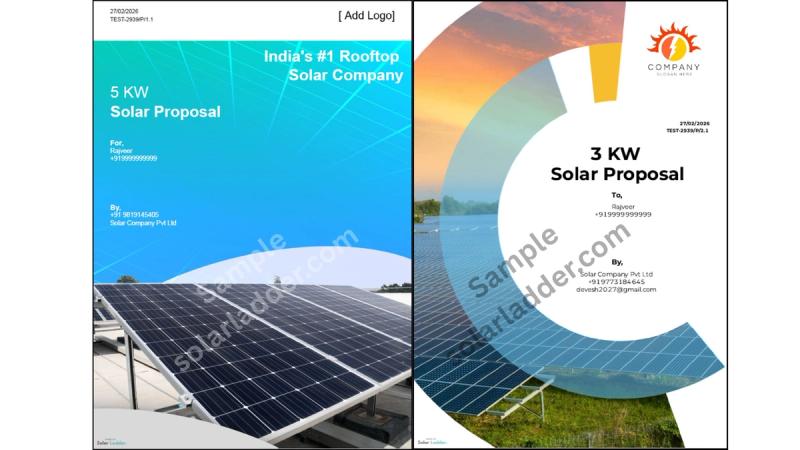
Page 1: The Cover Page
Goal: Make a powerful first impression. It should look premium and branded.
- Content:
- A high-quality "hero image" (ideally a beautiful home with solar).
- Your Company Logo.
- Proposal Title (e.g., "Solar Energy Proposal for [Client Name]").
- Date and Validity Period.
- Contact Details.
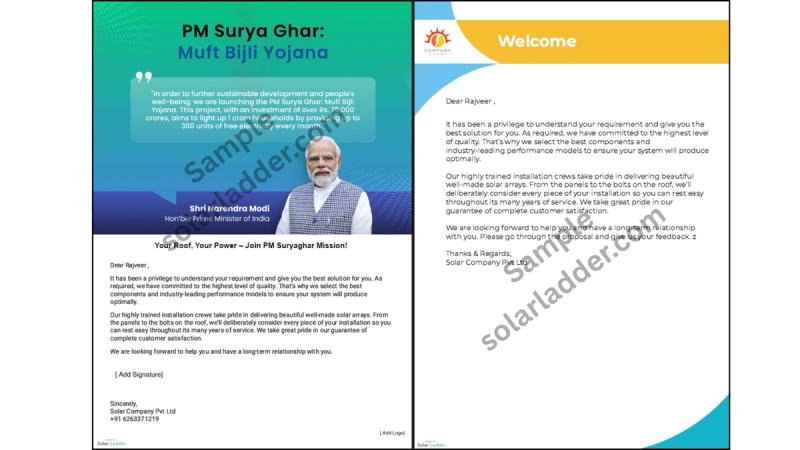
Page 2: The Welcome Letter
Goal: Personalize the offer and reiterate your value proposition.
- Content:
- A professional letter addressed directly to the customer.
- A brief thank you for the opportunity to quote.
- A 2-sentence summary of why your company is the right choice (e.g., focusing on quality, safety, or speed).
- Signed by the CEO or the Sales Head.
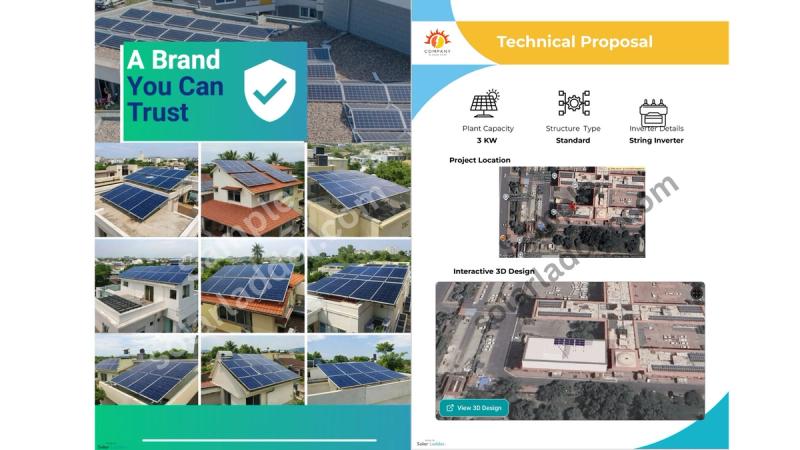
Page 3: Installer Profile & Past Projects
Goal: Build immediate social proof and trust. "We have done this before."
- Content:
- Company Stats: Quick icons showing "Years in Business," "Total kW Installed," or "Happy Customers."
- Project Gallery: A grid of 4-6 high-quality photos of real installations you have completed (not stock photos). Show diverse roof types (tiled, flat concrete, elevated structures).
If you want to select from thousands of solar proposal templates you can use Solar Ladder’s Proposal tool. For more information visit solarladder.com
Page 4: System Overview & Savings (The Core Page)
Goal: Show them the solution and the financial win. This is the page they will look at longest.
- Content:
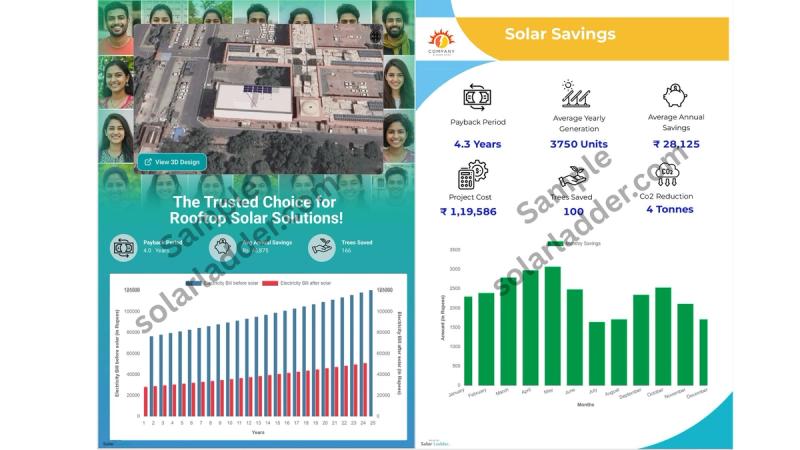
- 3D Visual: A professional 3D model of their actual home with panels placed. This is crucial in 2026.
- System Specs Summary: E.g., "5kW On-Grid System."
- Financial Highlights: Big, bold numbers showing:
- Estimated Monthly Generation (Units).
- Current Bill vs. New Bill.
- Total Lifetime Savings (25 Years).
- Payback Period (e.g., 3.5 Years).
Page 5: Bill of Material (BOM)
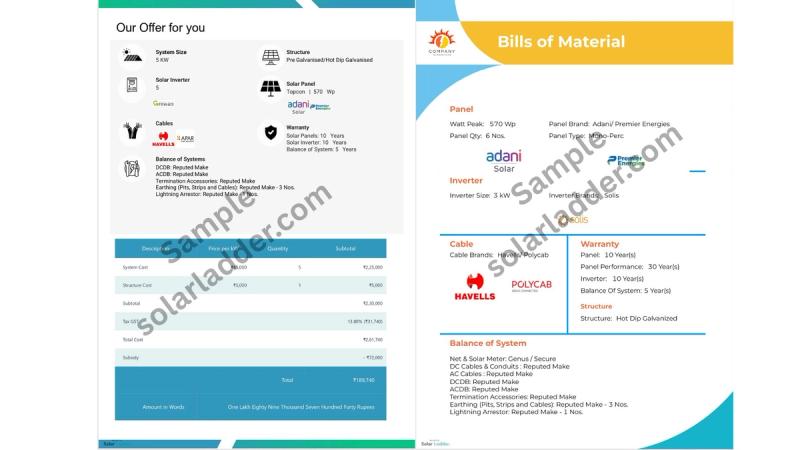
Goal: Complete transparency about hardware quality.
- Content:
- A clean table listing major components.
- Solar Modules: Brand, Wattage, Quantity, Type (e.g., Mono PERC Half-Cut).
- Inverter: Brand, Capacity, Technology (e.g., String Inverter with Wi-Fi).
- Structure: Material specification (e.g., Hot-Dip Galvanized Steel, 80 microns).
- Warranty Details: Clearly state product and performance warranties for each item.
Page 6: Pricing & Payment Schedule
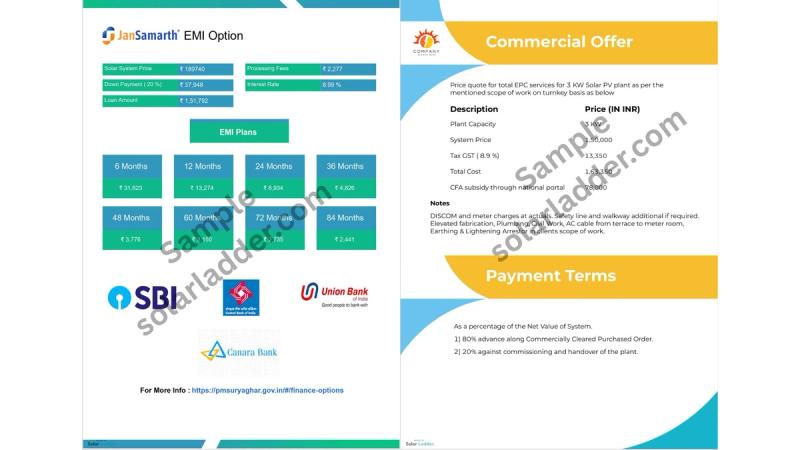
Goal: Clear, unambiguous costs and milestones. No hidden fees.
- Content:
- Price Breakdown:
- Total Gross System Cost.
- Less: PM Surya Ghar Subsidy (if applicable).
- = Net Amount Payable by Customer.
- Payment Milestones: A clear schedule (e.g., 20% Advance, 70% Before Material Delivery, 10% After Commissioning).
Page 7: Terms and Conditions (T&C)
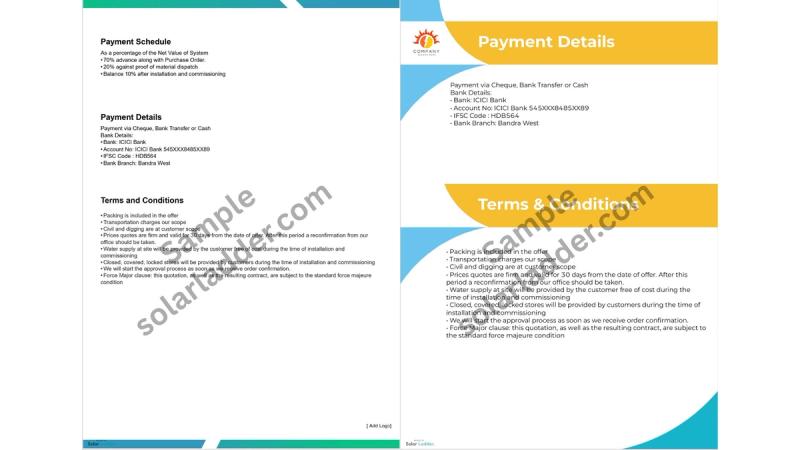
Goal: Protect both parties and set expectations.
- Content:
- Scope of Work (what is included vs. excluded, e.g., net metering liaisoning).
- Site access requirements.
- Warranty limitations.
- Force Majeure clauses.
- Keep it readable; avoid overly complex legal jargon if possible.
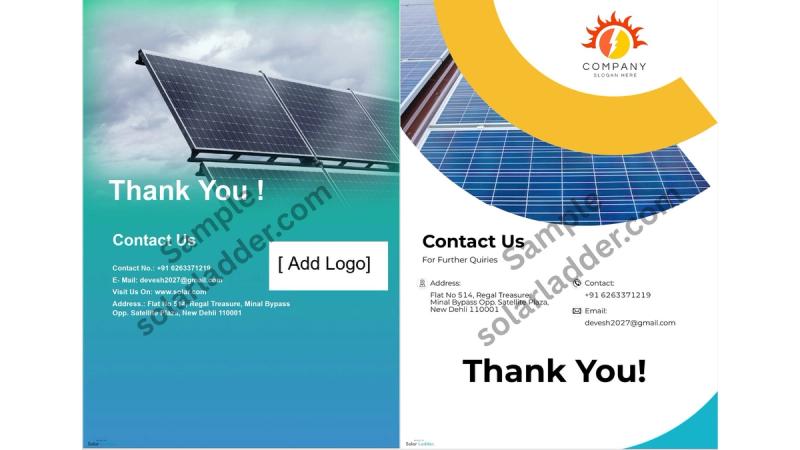
Page 8: Thank You & Next Steps
Goal: A clear Call to Action (CTA) to close the deal.
- Content:
- A brief thank you message.
- Clear Instructions: "To accept this proposal, please sign below / click the button."
- Space for physical or digital signatures.
Summary
By adopting this structured 8-page solar quotation format, you move from selling a commodity to selling a professional service. This format builds confidence, answers key questions before they are asked, and significantly increases your chances of winning the order.
If you want to select from thousands of solar proposal templates and have unlimited customisation you can use Solar Ladder’s Proposal feature. For more information visit solarladder.com