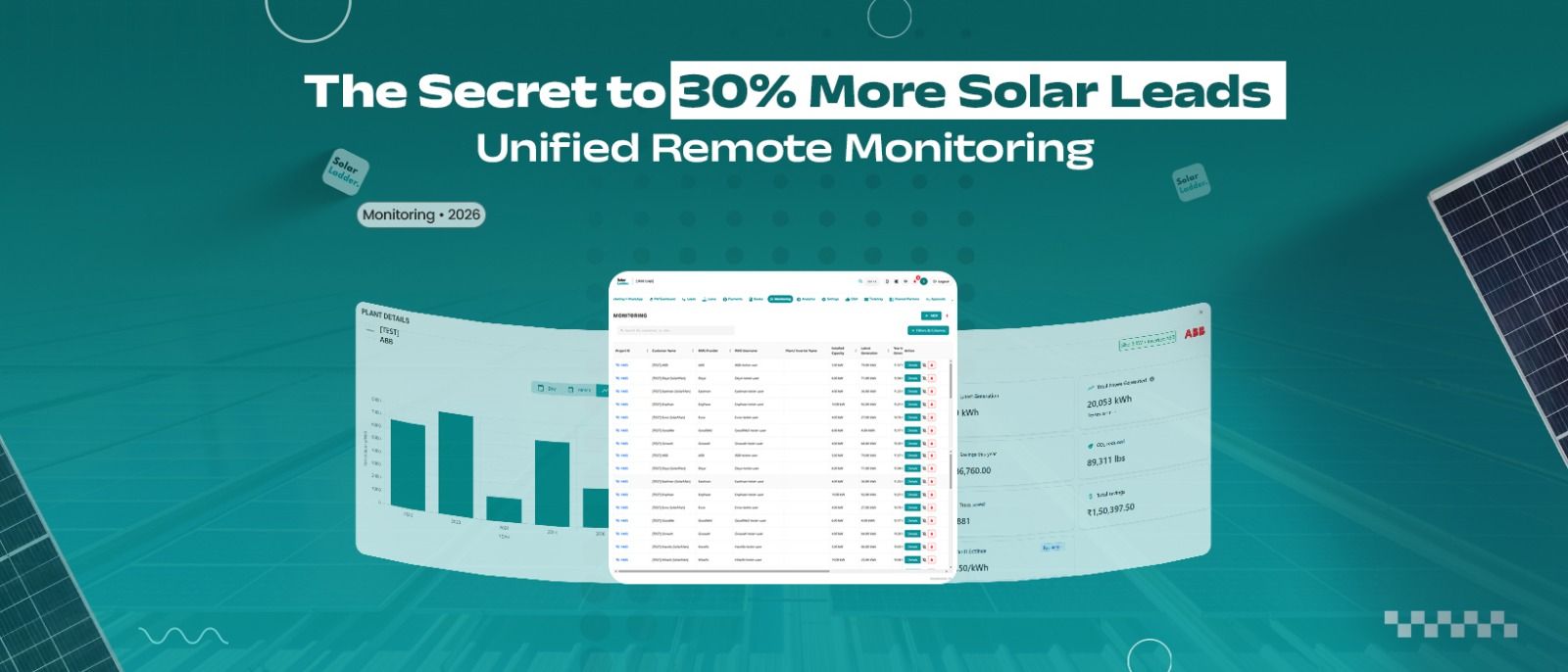
TL;DR Unified Remote Monitoring helps solar EPCs generate more referral leads by preventing customer “bill shock” and building long-term trust. Solar Ladder’s hardware-free RMS dashboard combines multiple inverter brands into one platform, enabling proactive issue detection, better post-sales service, and stronger customer satisfaction-turning happy customers into powerful referral sources.
1. The "Big Ticket" Barrier: Why Trust is Mandatory
For the average Indian household, a rooftop solar plant is one of the largest financial commitments they will make, second only to buying a home or a car.
- Average Urban Middle-Class Income: ₹50,000 – ₹1,00,000 per month.
- Average 3kW – 5kW Plant Cost: ₹1,50,000 – ₹3,00,000.
When a customer spends 3–4 times their monthly salary on a technology they don't fully understand, they aren't just buying hardware; they are buying a promise of savings. If that promise isn't tracked, trust evaporates.
2. The 30% Referral Rule
Data shows that 30% or more of high-quality leads for successful EPCs come directly from referrals.
- Easy Conversion: Referral leads already trust you because their neighbor/friend vouched for you.
- Zero Acquisition Cost: You aren't paying for Google or Meta ads; your work is doing the talking.
3. The "Bill Shock" Problem: A Silent Reputation Killer
The biggest post-sales nightmare is "Bill Shock." Most customers don't check their generation daily. They only realize something is wrong—like a tripped MCB or dusty solar panels—when their electricity bill arrives 30 days later.
By then, it's too late. The customer is angry, the savings are gone, and your chances of a referral are buried under a mountain of complaints.
4. The "App Fatigue" Struggle for Installers
As an installer, you likely use multiple inverter brands to suit different budgets: Havells, Polycab, Growatt, Sungrow, and more.
The problem? Each brand has its own app, its own login, and its own confusing dashboard. Manually checking 50 different logins every morning to see if your customers' plants are working is impossible. Most installers simply give up, leaving the customer to discover faults on their own.
5. The Solution: SL Remote Monitoring Dashboard
At Solar Ladder, we recognized this friction years ago. We built the SL Remote Monitoring Dashboard to give installers a single "Control Room" for their entire fleet.
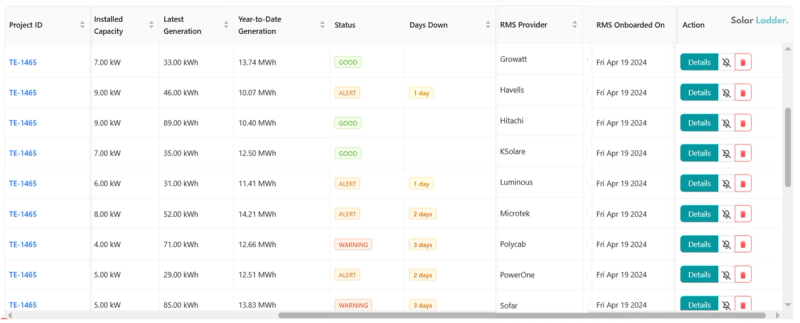
- One Dashboard, All Brands: See your Growatt, Havells, Polycab and many more plants in one single list.
- Hardware-Free Integration: We were the first to introduce No-Hardware Monitoring. You don’t need to install extra IoT devices or expensive data loggers. Simply integrate the inverter API once, and you’re live.
- Zero Extra Cost: No hidden hardware fees mean higher margins for you and better service for the client.
6. Proactive Service: From Installer to Solar Hero
The dashboard categorizes your plants into three simple stages:
- Healthy: System performing as expected.
- Warning: Generation is lower than usual (time to suggest a panel cleaning!).
- Critical: Generation is low for a long period of time.
By seeing a Critical alert on your dashboard, you can call the customer before they even know there’s a problem.
"Hi Mr. Sharma, I noticed your plant is not generating as expected. Could you check if the the cleaning was done recently?"
That level of service turns a standard installation into a world-class experience. It builds a level of trust that naturally leads to "tons of referrals."
Conclusion: Leading the Segment
Solar Ladder was the pioneer in adding hardware-free monitoring. Today, we continue to lead the segment by helping 800+ EPCs move from "reactive fixing" to "proactive monitoring."
In 2026, don't just wait for the bill to arrive. Monitor, manage, and multiply your business through the power of trust.
Frequently Asked Questions
You can use the Solar Ladder app, which acts as a centralized app to track solar inverters. It integrates directly with most major inverter brands (like Growatt, Solis, and Sungrow) via software, pulling all your project data into a single, high-fidelity dashboard without switching between multiple native apps.