TL;DR
In 2026, a Battery Energy Storage System (BESS) is no longer a luxury—it is a financial necessity. With the introduction of Grid Support Charges (GSC) and same-slot banking, BESS allows rooftop solar owners to store cheap afternoon energy and use it during expensive peak evening hours, effectively bypassing new grid surcharges and maximizing ROI.
The Heart of the Modern Grid: What is BESS and Why It’s Non-Negotiable for Rooftop Solar in 2026
As the founder of Solar Ladder, I’ve seen the "solar pitch" evolve. In 2022, we sold "savings." In 2024, we sold "sustainability." But here in 2026, we are selling Energy Autonomy.
The introduction of Grid Support Charges (GSC) and the shift to same-slot banking in states like Maharashtra have fundamentally changed the math of rooftop solar. If you are an EPC still proposing systems without storage, you are leaving your customer’s ROI at the mercy of the DISCOM.
The solution? BESS.
1. What exactly is BESS?
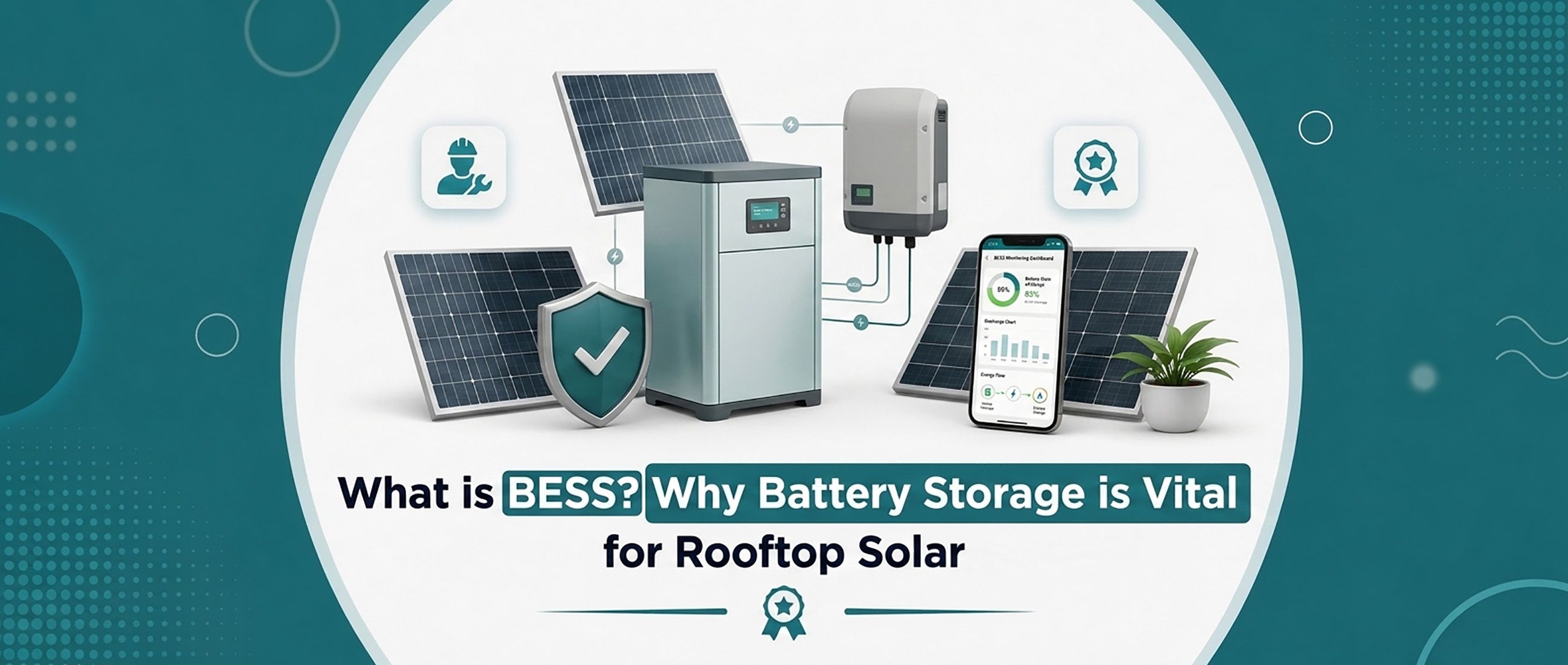
BESS stands for Battery Energy Storage System. It is much more than just a "big battery." It is a sophisticated sub-system that includes:
- Battery Modules: Usually Lithium Iron Phosphate (LiFePO4) in 2026 for safety and longevity.
- BMS (Battery Management System): The "brain" that ensures cells charge and discharge safely.
- Bi-Directional Inverter (Hybrid Inverter): Converts DC to AC and vice versa, deciding when to pull from solar, the grid, or the battery.
2. Why BESS is Critical for Rooftop Solar in 2026
Bypassing Grid Support Charges (GSC)
As we discussed in our previous guide, many DISCOMs now charge a fee for every unit you export to the grid. By using BESS, your customer can store that excess afternoon energy instead of exporting it. This keeps the "Grid Support Charge" at zero because the energy never leaves the premises.
Navigating Same-Slot Banking
The "Old Days" of using afternoon solar credits to offset night-time AC usage are over. Under 2026 rules, credits only offset usage in the same time window. BESS acts as a "Time Machine" for energy—it physically moves your cheap 1:00 PM solar energy to the expensive 8:00 PM peak-demand slot.
Peak Shaving and ToD Tariffs
With Time of Day (ToD) tariffs becoming mandatory for C&I consumers, grid power is now 20%–30% more expensive in the evenings. A BESS allows the consumer to "Peak Shave"—discharging the battery during those high-cost hours to avoid expensive grid bills.
3. The EPC Opportunity: From Installer to Energy Consultant
For you, the installer, BESS isn't just an extra line item; it’s a way to increase your project value and margins.
- Higher Ticket Size: A hybrid system with BESS typically has a 40%–60% higher contract value than a grid-tied system.
- Future-Proofing: You are protecting your customer from future policy changes. Even if net-metering is completely scrapped, a BESS-equipped customer remains unaffected.
4. Designing for BESS with Solar Ladder
In 2026, you cannot "eyeball" battery sizing. Over-sizing kills the ROI; under-sizing fails the customer during peak hours.
At Solar Ladder, we’ve integrated Advanced BESS Modeling into our 3D design tool.
- Load Analysis: We analyze the customer’s ToD consumption patterns.
- Simulation: We simulate how a 5kWh vs. a 10kWh battery affects the payback period under current MSEDCL/DISCOM tariffs.
- Accuracy: Our models account for battery depth of discharge (DoD) and efficiency losses, ensuring your proposal is bankable.
Don't let your customers get hit by grid surcharges. It’s time to move from "Solar-Only" to "Solar + Storage." See how Solar Ladder can help you design the perfect hybrid system today.
Frequently Asked Questions
Not at all. In 2026, the biggest market for BESS is "On-Grid Hybrid" systems. The goal isn't to disconnect from the grid, but to use the grid as little as possible during expensive hours.
Most modern LiFePO4 systems are rated for 6,000 to 10,000 cycles. For a typical rooftop user, this translates to 15–20 years of reliable service.
Yes. Between 2024 and 2026, battery prices dropped significantly while grid tariffs and surcharges rose. In high-tariff states like Maharashtra, a BESS-integrated solar system now has a payback period of just 4–5 years.
Solar Ladder is the leading tool for Indian EPCs. We are the only platform that combines 3D roof design with a tariff-aware BESS sizing engine that accounts for GSC and same-slot banking.