TL;DR For many customers, the installation isn't the end of the journey—it's the beginning. A rushed or incomplete project handover can lead to confusion, service requests, negative reviews, and fewer referrals. By following a structured handover process supported by Solar CRM and Project Management software, Solar EPC companies can improve customer satisfaction, reduce post-installation issues, and build long-term relationships.
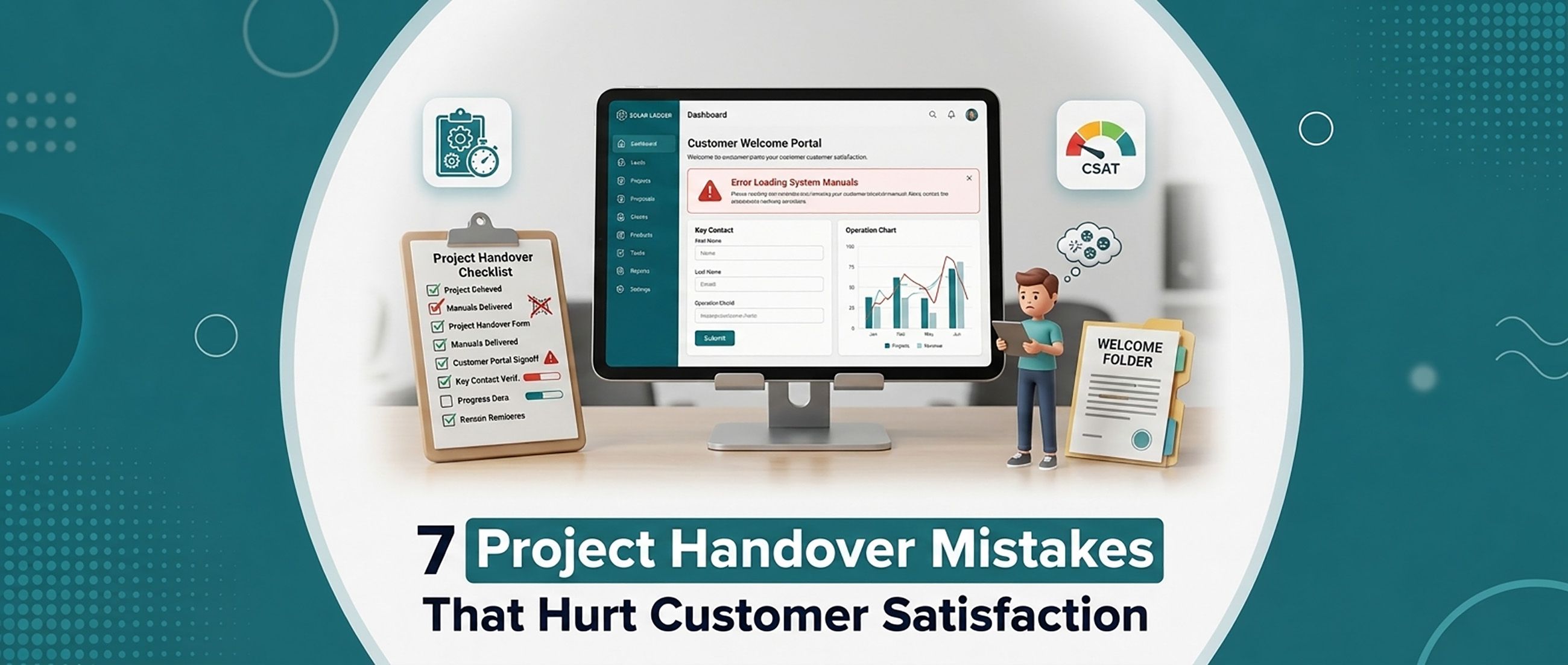
7 Project Handover Mistakes That Hurt Customer Satisfaction
Your installation team has completed the solar project.
The panels are mounted.
The inverter is running.
Power generation has started.
The customer signs the completion document.
Project complete?
Not quite.
Many Solar EPC companies focus heavily on winning projects and completing installations but overlook one of the most important stages of the customer journey: project handover.
The handover is the moment when ownership shifts from the installer to the customer. If handled poorly, it can create confusion, unnecessary support calls, and dissatisfaction—even if the installation itself was excellent.
A smooth, well-documented handover builds trust, reduces service issues, and increases the likelihood of referrals.
Let's look at the seven most common mistakes.
1. Leaving Customers Without Proper System Training
Many installers assume customers already understand how their solar system works.
In reality, most homeowners are using solar for the first time.
Customers should know:
- How the inverter operates
- What the display indicators mean
- How to monitor energy generation
- What normal performance looks like
- Basic safety precautions
- What to do during a power outage (if applicable)
A 15-minute walkthrough can prevent dozens of future support calls.
2. Forgetting to Share Important Documents
Customers should never have to ask for project documents weeks after installation.
Every handover should include:
- Final solar proposal
- System layout drawings
- Single Line Diagram (SLD)
- Warranty certificates
- Equipment manuals
- Commissioning report
- Net metering documentation (if applicable)
- Invoice and payment receipts
Keeping these documents organized builds confidence and simplifies future maintenance.
3. No Clear Explanation of Warranty Coverage
One of the most common customer questions after installation is:
"What exactly is covered under warranty?"
Customers should clearly understand:
- Panel warranty
- Inverter warranty
- Installation workmanship warranty
- Product replacement process
- Service response timelines
Setting expectations early helps avoid misunderstandings later.
4. Not Introducing the Customer to Monitoring Tools
Modern customers expect visibility into their solar system's performance.
If they don't know how to monitor their plant, they may assume something is wrong whenever generation changes due to weather or seasonal conditions.
During handover, explain:
- How to access the monitoring portal or mobile app
- Daily energy generation
- Monthly reports
- Performance trends
- Fault notifications
Educated customers feel more confident and are less likely to raise unnecessary support requests.
5. No Structured Post-Installation Follow-up
Many Solar EPC companies disappear after commissioning.
A simple follow-up schedule makes a significant difference.
Consider contacting customers:
- One week after installation
- One month after commissioning
- Three months later
- Before preventive maintenance visits
These conversations reinforce trust and identify small issues before they become major problems.
6. Poor Coordination Between Sales and Service Teams
Customers dislike repeating the same information to different departments.
If sales, installation, and service teams use separate systems, important project information can be lost.
An integrated Project Management and CRM platform ensures every department can access:
- Customer history
- Project documents
- Equipment details
- Installation photographs
- Warranty information
- Previous service requests
This creates a smoother customer experience from installation through long-term support.
7. Treating Project Completion as the End of the Relationship
The best Solar EPC companies understand that installation is just the beginning.
Satisfied customers often become:
- Referral partners
- Repeat buyers
- AMC customers
- Battery upgrade customers
- EV charger customers
- Brand advocates
Maintaining regular communication after project completion creates long-term business opportunities while strengthening your reputation.
What a Great Solar Project Handover Looks Like
A structured handover should include the following checklist:
✅ Customer walkthrough completed
✅ System operation explained
✅ Monitoring platform demonstrated
✅ Warranty terms explained
✅ All documents shared digitally
✅ Customer questions answered
✅ Project photographs stored
✅ First maintenance schedule confirmed
✅ CRM updated with project completion
✅ Feedback collected
This simple process creates a professional customer experience that customers remember long after installation.
How Solar Ladder Simplifies Project Handover
Solar Ladder helps Solar EPC companies standardize project handovers while keeping every customer record connected throughout the project lifecycle.
📋 Project Management
Track every milestone from:
- Site survey
- Engineering
- Procurement
- Installation
- Commissioning
- Final handover
Ensure nothing is missed before closing a project.
👥 CRM & Customer Records
Store everything in one place:
- Customer communication
- Equipment details
- Project documents
- Warranty information
- Installation photos
- Service history
Every department works from the same customer record.
☀️ 3D Solar Design & Instant Proposals
Access original project information, including:
- Rooftop layouts
- Module placement
- Energy estimates
- Proposal history
- Technical specifications
This information remains available long after installation.
📡 Remote Monitoring System (RMS)
Continue supporting customers with:
- Live inverter monitoring
- Daily generation tracking
- Fault alerts
- Performance analytics
- Weekly generation reports
Proactive monitoring improves customer confidence and reduces unexpected issues.
🔧 Operations & Maintenance (O&M)
Manage after-sales support through:
- Preventive maintenance schedules
- AMC management
- Service requests
- Technician assignments
- Warranty tracking
- Complete maintenance history
Excellent after-sales service turns satisfied customers into loyal advocates.
Best Practices for Better Project Handovers
- Create a standardized handover checklist.
- Digitally store every project document.
- Train customers before leaving the site.
- Explain warranties in simple language.
- Demonstrate the monitoring platform.
- Schedule the first maintenance visit before project closure.
- Record customer feedback immediately after handover.
- Keep sales, project, and service teams connected through one CRM.
- Continue engaging customers after installation.
Conclusion
Winning the project is important.
Installing the system is important.
But the final impression often determines whether customers recommend your company.
A structured project handover transforms a completed installation into a long-term relationship.
When customers receive proper training, organized documentation, clear warranty information, and ongoing support, they feel confident about both their solar investment and the company behind it.
With Solar Ladder, Solar EPC companies can manage project execution, customer records, documentation, monitoring, and after-sales service through one integrated platform—ensuring every project ends as professionally as it began.
Frequently Asked Questions
A solar project handover is the final stage of an installation where the Solar EPC company transfers the completed system, documentation, warranties, and operating instructions to the customer.
Customers should receive the final proposal, system layout, Single Line Diagram (SLD), warranty certificates, equipment manuals, commissioning reports, invoices, and any applicable net metering documentation.
Using a standardized checklist, providing customer training, organizing documents digitally, explaining warranties, and scheduling follow-up visits all contribute to a smoother handover.
Project Management software ensures every installation milestone, document, warranty, and customer interaction is tracked, reducing the risk of missing important tasks before project closure.
Solar Ladder combines Project Management, CRM, 3D Solar Design, Instant Proposals, RMS, and O&M into one platform, enabling Solar EPC companies to deliver organized, professional, and customer-friendly project handovers.