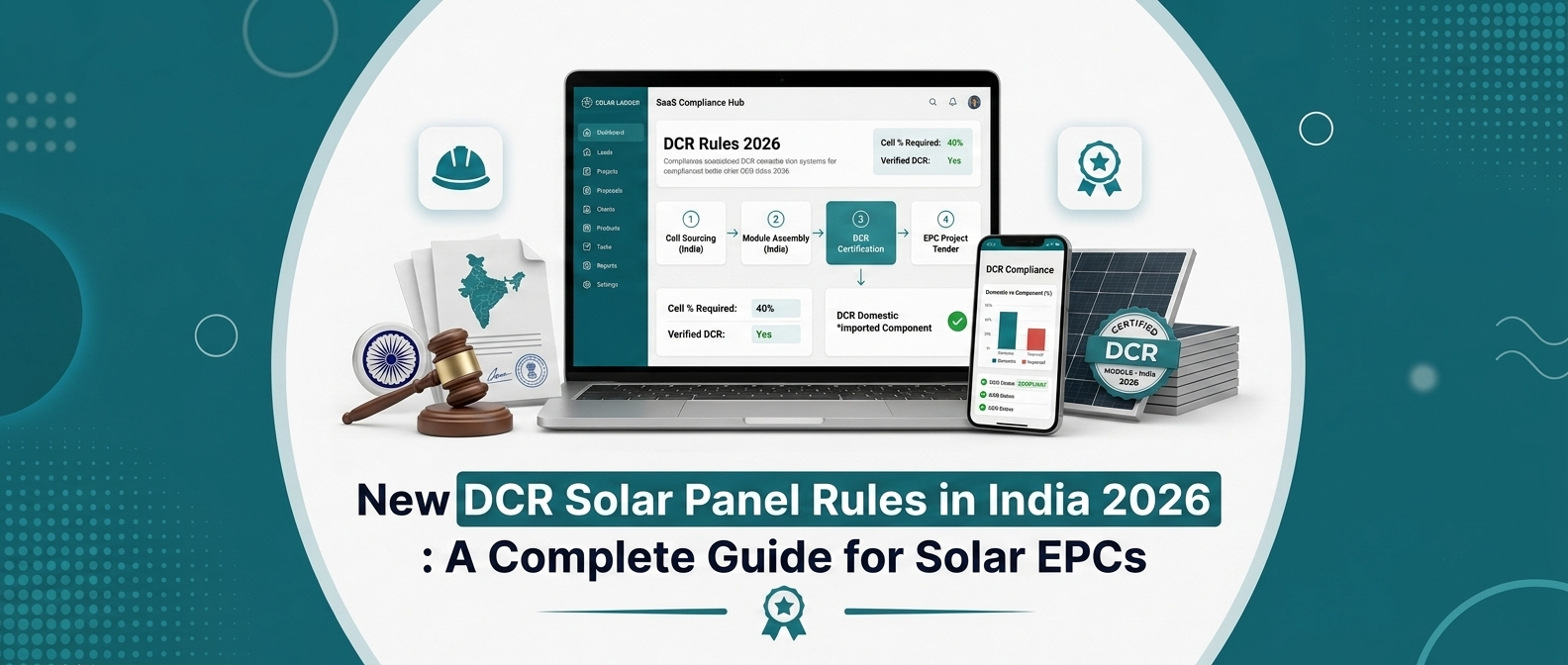
TL;DR: In June 2026, the Ministry of New and Renewable Energy (MNRE) made domestic cell sourcing (ALMM List-II / DCR) mandatory across grid-connected solar installations.However, following industry feedback on domestic cell supply deficits, MNRE issued an Office Memorandum deferring the mandate until December 31, 2026, specifically for Net-Metering and C&I Open Access projects.Residential subsidy schemes like PM Surya Ghar: Muft Bijli Yojana remain exempt from this deferral—they strictly mandate 100% DCR panels (domestically produced cells and modules) to receive Central Financial Assistance (CFA). Solar EPCs must accelerate project commissioning before the December 31 deadline while leveraging dedicated solar software to streamline lead management, site surveys, automated quotation generation, and project execution.
DCR Solar Panel Rules in India 2026: A Complete Guide for Solar EPCs
Navigating India's renewable energy regulatory framework requires solar Engineering, Procurement, and Construction (EPC) companies to stay agile. Policy shifts around the Domestic Content Requirement (DCR) and the Approved List of Models and Manufacturers (ALMM) directly dictate panel selection, project margins, DISCOM net-metering approvals, and subsidy eligibility.
Understanding the current policy landscape, the exact timeline of DCR mandates and exemptions, and how digital software tools keep your EPC operations profitable through regulatory changes is essential.
The Policy Timeline: How DCR Was Mandated, Relaxed, and Extended
The Domestic Content Requirement (DCR) policy was designed to foster self-reliance under the "Make in India" initiative. However, structural gaps between module assembly capacity (~193 GW) and domestic solar cell manufacturing capacity (~30 GW) created severe market bottlenecks.
- June 1, 2026 – The Blanket Mandate: The Ministry of New and Renewable Energy (MNRE) (https://mnre.gov.in/) mandated that all grid-connected solar projects in India use DCR-compliant modules containing cells manufactured exclusively by ALMM List-II approved domestic suppliers.
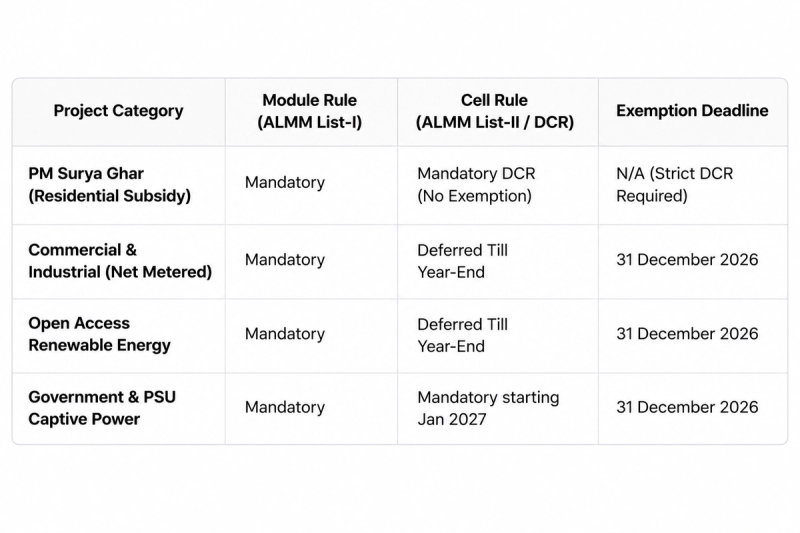
- July 18, 2026 – The Exemption Memorandum: Recognizing that domestic cell supply could not meet demand for Commercial & Industrial (C&I) and rooftop projects, MNRE issued Office Memorandum No. 283/53/2026-GRID SOLAR. This order deferred/exempted the ALMM List-II (domestic cell) mandate until December 31, 2026, for non-subsidized Net-Metering and Open Access projects.
- January 1, 2027 Onward: Projects commissioned after December 31, 2026, must strictly comply with ALMM List-II domestic cell sourcing rules without exception.
Crucial Distinction: The exemption applies ONLY to C&I net-metering and open access installations commissioned on or before December 31, 2026. Subsidized residential schemes—such as the PM Surya Ghar: Muft Bijli Yojana—continue to require 100% DCR-certified panels (both cells and modules assembled in India) with no grace period granted.
For a deeper dive into the original MNRE deferment order details, read our detailed policy analysis on MNRE Defers Domestic Solar Cell Mandate to Dec 2026.
Why the December 31, 2026 Deadline Creates an EPC Bottleneck
With non-DCR modules permitted for commercial and net-metered installations through December 31, 2026, customer demand is surging. C&I clients want to commission systems before 2027 pricing adjustments take effect.
However, DISCOM inspections, net-metering synchronization, and physical engineering tasks create massive operational pressure:
- "Installed" is not "Commissioned": The MNRE order specifies that plants must be fully commissioned (metered, tested, and synchronized to the grid) by December 31.
- DISCOM Delays: Year-end queues at local electricity distribution companies can stall net-metering approvals by weeks.
- Documentation Red Tape: Submitting improper DCR documentation or mismatched panel serial numbers forfeits subsidy claims under PM Surya Ghar.
How Solar Software Helps EPCs Handle Regulatory Shifts and Scale
Relying on manual spreadsheets and site visits during regulatory transition windows leads to project delays, missed commissioning deadlines, and compliance errors. Modern solar software platforms streamline these operational friction points:
- Instant Customer Management (CRM): Track incoming inquiries, segment leads based on project type (Subsidized Residential vs. C&I Net-Metered), and route them to design teams instantly.
- Rapid Automated Proposals: Generate engineering-grade quotations and return-on-investment (ROI) layouts within minutes, helping sales representatives close deals faster during the exemption window.
- Mobile Site Surveys: Capture site photos, roof azimuth, shadow angles, and DISCOM meter locations via mobile survey tools to prevent rework and speed up engineering approvals.
- End-to-End Stage Tracking: Monitor project milestones—from DISCOM application submission to physical installation, inspection scheduling, and grid synchronization—in real time.
- Document and Compliance Repository: Digitally attach serial numbers, DCR certificates, ALMM List-I verification sheets, and net-metering forms to every customer profile to prevent paperwork errors.
- Client Portal: Give end customers direct visibility into their DISCOM approval status and commissioning timeline, drastically reducing phone calls and improving satisfaction.
Explore more operational best practices on the main Solar Ladder Blog to keep your installation business ahead of market policy updates.
Frequently Asked Questions
No. PM Surya Ghar: Muft Bijli Yojana strictly mandates Domestic Content Requirement (DCR) solar modules, meaning both the solar PV cells and finished modules must be manufactured in India.Using imported panels or non-DCR modules will disqualify the client from receiving the government subsidy (CFA).
If a project is physically installed in December 2026 but fails to receive grid synchronization and formal DISCOM commissioning until January 2027, it misses the ALMM List-II exemption window.The system will be subject to 2027 compliance rules, which require modules with ALMM List-II approved domestic cells.
ALMM List-I regulates approved solar PV modules (panels) made by certified manufacturers.ALMM List-II specifically regulates the domestic solar PV cells assembled inside those modules.