TL;DR: Most residential solar deals aren't lost because your quote was too high—they are lost due to poor follow-up. Relying on messy spreadsheets or sending generic "just checking in" messages leads to immediate ghosting. To close modern homeowners, solar EPCs must follow up with tailored value—such as net-metering updates, localized shading data, or policy clarity. By leveraging Solar Ladder's integrated CRM, automated task reminders, and direct WhatsApp automation, solar installers can effortlessly bulk-send valuable insights and ensure no warm lead slips through the cracks.
How to Follow Up with Residential Customers: A Definitive Guide for Solar EPCs
The residential rooftop solar market is experiencing an unprecedented boom. Driven by rising grid tariffs and lucrative government incentives like the PM-Surya Ghar Muft Bijli Yojana, thousands of homeowners are looking to make the switch to clean energy.
However, managing residential solar sales comes with its own unique set of challenges. Unlike commercial clients, homeowners are investing their hard-earned personal savings. They are naturally cautious, tech-savvy, and require an average of 5 to 7 touchpoints before signing a contract.
Unfortunately, this is where most solar EPC contractors drop the ball. A sales representative sends a proposal, waits a couple of days, and then calls the client with a generic, "Hello sir, did you check our quote?"
The result? The customer feels pressured, doesn't see any new value, and eventually ghosts the sales rep. If you want to scale your solar business, you need to transform your follow-up strategy from a generic check-in into a value-driven consultation.
Here is how successful solar EPCs master the art of the residential follow-up.
The Golden Rule: Don’t Follow Up Just to Follow Up
The fastest way to lose a warm lead is to pester them without a purpose. Homeowners are busy, and your generic "any updates?" message adds zero value to their day. Instead, it signals that you are solely focused on closing the deal rather than solving their energy problems.
Every single follow-up should give the customer a reason to look forward to your message. Think of yourself as a trusted advisor, not just a vendor. Your follow-up should answer a hidden objection, educate them on technical nuances, or provide timely updates that affect their decision.
By changing your approach from transactional to educational, you build immediate trust and differentiate your solar EPC company from local competitors who rely on aggressive sales tactics.
High-Value Content Examples to Use in Your Solar Follow-Ups
If you aren't supposed to ask "did you read my quote?", what should you say? Here are four practical, high-value examples of content you can use to follow up with residential solar clients:
1. Local Policy and Subsidy Updates Government guidelines and local state policies change frequently. Use these changes as a natural, urgent reason to reach out. For example: "Hi [Name], the local distribution company just announced a new deadline for net-metering applications this quarter. If we lock in your system design this week, we can fast-track your approval process before the queue gets backed up." Sharing official guidelines from authoritative sources like the Ministry of New and Renewable Energy builds immense credibility.
2. Tailored 3D Design and Shading Insights Instead of sending a static PDF, send an updated snippet of their rooftop's solar layout. Show them how a small adjustment to their design avoids the shadow cast by their neighbor's water tank or a nearby tree. As highlighted in our guide on The Solar Proposal That Closes vs. The One That Gets Ignored, homeowners can't buy what they can't visualize. Sending a dynamic visual breakdown shifts their focus from price to performance.
3. Visual ROI and Tariff Hike Realities Most homeowners don't fully understand the long-term math of solar energy. Follow up by sharing a clean visual graph that compares the steadily rising cost of grid electricity against their fixed, one-time investment in solar. Show them exactly how their electricity bill will drop over the next 25 years.
4. Nearby Project Case Studies and Social Proof Nothing builds confidence like neighborly validation. Send a quick picture or a short video testimonial of a successful installation you recently completed in their local area or pin code. "Hi [Name], we just finished commissioning a 5kW system for a bungalow just 2 kilometers away from your house. They are already seeing their daily generation hit 22 units. Thought you'd like to see how a similar setup performs in your exact neighborhood!"
Streamlining Follow-Ups with Solar Ladder CRM and Automation
Manually tracking dozens of residential leads across paper notebooks, Excel sheets, and scattered WhatsApp chats is a recipe for operational chaos. Reps forget who to call, warm leads turn cold, and revenue leaks out of your pipeline daily.
To scale efficiently, modern solar EPCs rely on purpose-built digital platforms. Solar Ladder’s specialized software modules remove the friction from your sales pipeline entirely. You can learn more about managing these operational bottlenecks in our ultimate breakdown of Solar Software India: The Complete Guide for 2026.
Here is how Solar Ladder optimizes your follow-up workflow:
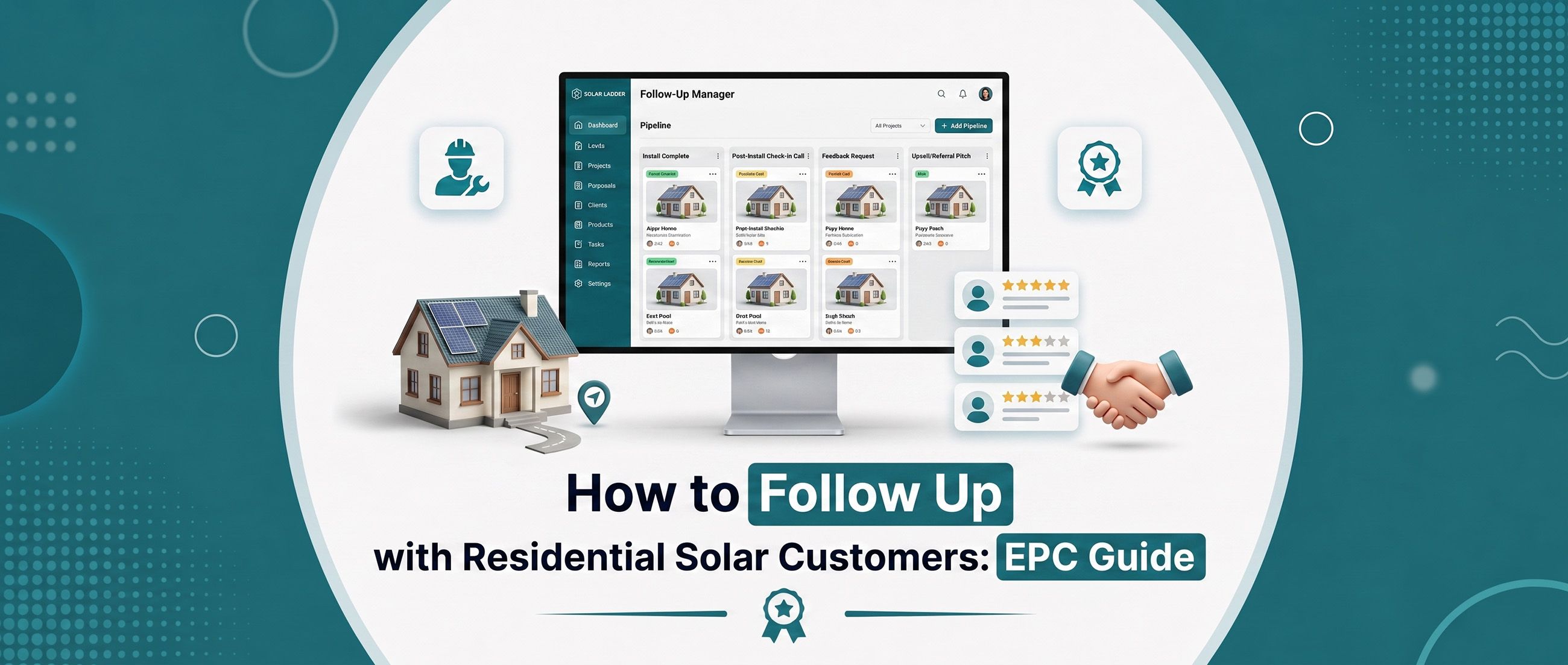
Automated Task Reminders With Solar Ladder, your sales team doesn't have to guess who to follow up with each morning. The CRM lets you map out your exact pipeline stages. The moment a proposal is generated, the system automatically schedules a follow-up task and drops automated reminders on your dashboard. You never miss a crucial follow-up window.
Direct WhatsApp Integration In today's market, phone calls are frequently ignored, but WhatsApp messages boast an open rate of over 90%. Solar Ladder allows you to natively link your WhatsApp to the platform. Sales reps can send highly personalized messages, technical 3D layout snapshots, or structural details directly from the customer's timeline inside the app.
Bulk Follow-Ups for Rapid Nurturing Got a list of 50 warm leads who haven't moved forward yet? Instead of messaging them one by one, Solar Ladder enables you to select multiple contacts in your pipeline and bulk-send automated follow-ups. You can broadcast policy updates, festive discounts, or recent localized project success stories to hundreds of prospective clients simultaneously, instantly reviving dormant deals.
For a deeper dive into maximizing your conversion rates, check out our practical blueprint on 5 Ways to Increase Your Solar Proposal Acceptance Rate.
Conclusion: Turn Your Follow-Up into a Competitive Edge
Winning in the residential solar market isn't just about offering the lowest price; it is about delivering the highest level of professionalism and trust. By replacing generic "checking-in" phone calls with value-driven, automated touchpoints, you respect your customer's time while subtly positioning your solar EPC business as the most reliable expert in the market.
Stop letting valuable leads slip through the cracks of messy spreadsheets. Leverage Solar Ladder's integrated CRM, automated task tracking, and seamless WhatsApp tools to scale your sales engine and turn warm prospects into lifetime brand advocates.
Frequently Asked Questions
Homeowners usually ghost solar EPCs because they feel overwhelmed by technical jargon, are confused by competing quotes, or feel pushed by transactional follow-ups that offer no real value. Providing educational content and clear visual designs breaks this barrier.
Statistics show that a majority of residential solar sales require between 5 to 7 strategic touchpoints. Spacing these interactions out over several weeks using different content formats (subsidies, ROI, 3D layouts) keeps your brand top-of-mind without sounding intrusive.
It allows installers to link their WhatsApp directly to their solar CRM. This enables sales reps to send automated templates, design files, and bulk broadcast messages directly from the client dashboard, saving hours of manual data entry while maintaining high engagement rates.
The best method is to always lead with value. Instead of asking for a decision on your quote, share a recent policy update regarding local net-metering laws, a customized shading analysis of their roof, or a visual ROI chart outlining their long-term savings.