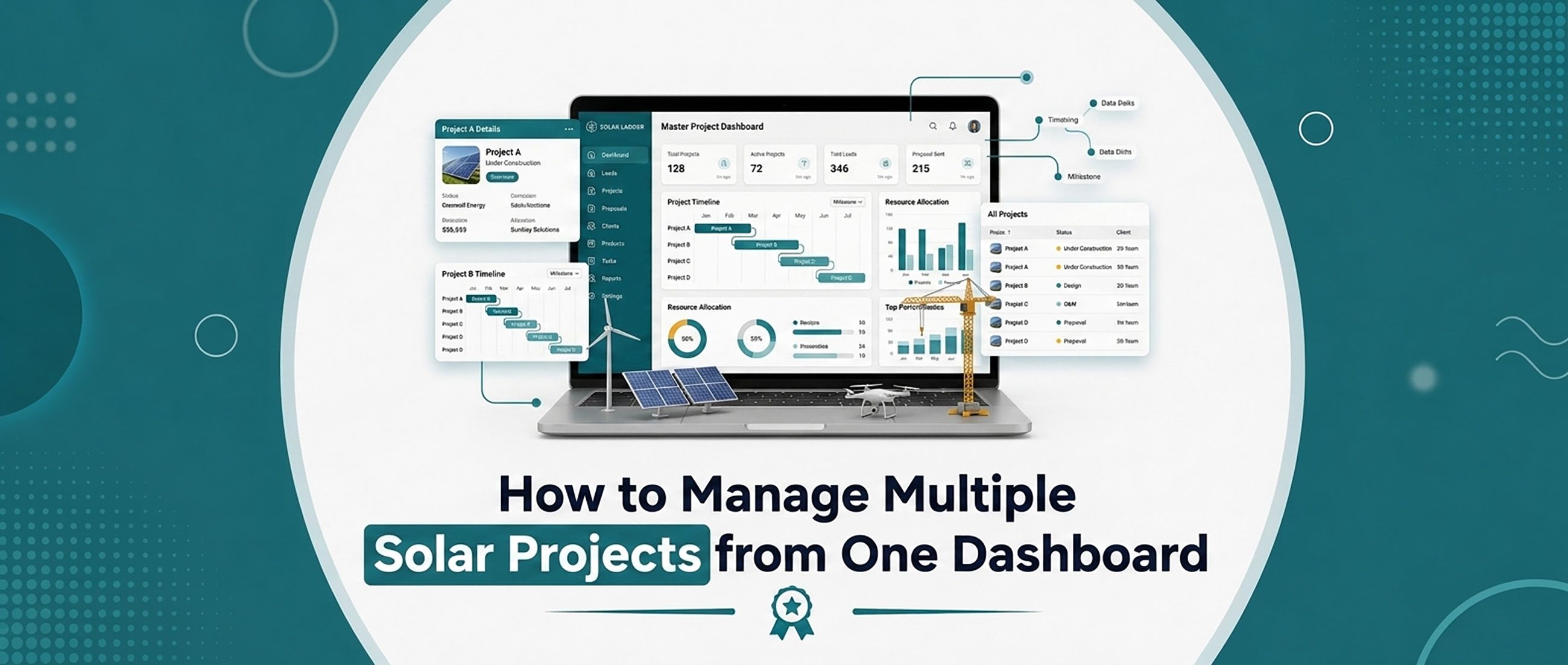
TL;DR Managing multiple solar installations using WhatsApp, Excel, and phone calls quickly becomes inefficient as your business grows. A centralized Solar Project Management Dashboard gives Solar EPC companies real-time visibility into every project, improves collaboration across teams, tracks progress, and helps complete installations faster. This guide explains the key features to look for and how platforms like Solar Ladder simplify project execution.
How to Manage Multiple Solar Projects from One Dashboard
For many Solar EPC companies, growth brings a new challenge.
Winning more projects is exciting—but managing them all efficiently is another story.
One project is waiting for a site survey.
Another is stuck in procurement.
A third is ready for installation.
Meanwhile, your customer is asking for a project update, the engineering team needs approvals, and the warehouse is waiting for material confirmation.
If your team is switching between WhatsApp groups, Excel sheets, emails, and phone calls to find answers, you're not managing projects—you're chasing information.
As installation volumes increase, this fragmented approach creates delays, communication gaps, and frustrated customers.
This is why successful Solar EPC companies are adopting Solar Project Management Dashboards that provide complete visibility into every project from a single screen.
Why Managing Multiple Solar Projects Is So Challenging
Every solar installation follows a series of interconnected steps:
- Lead approval
- Site survey
- 3D system design
- Proposal acceptance
- Engineering
- Procurement
- Material dispatch
- Installation
- Testing
- Net metering
- Commissioning
- After-sales service
Each stage depends on the previous one.
If one activity is delayed, the entire project timeline can be affected.
Now imagine managing 20, 50, or even 200 projects at the same time.
Without a centralized system, keeping track of progress becomes nearly impossible.
The Hidden Cost of Using WhatsApp and Excel
Many Solar EPC companies begin with familiar tools.
WhatsApp helps teams communicate quickly.
Excel helps organize project data.
But neither tool was designed to manage complex project workflows.
Common problems include:
- Multiple versions of the same spreadsheet
- Lost documents buried in chat history
- Missed follow-ups
- Unclear task ownership
- Delayed approvals
- Difficulty generating reports
- No real-time project visibility
These issues don't just waste time—they directly impact customer satisfaction and profitability.
What Is a Solar Project Management Dashboard?
A Solar Project Management Dashboard is a centralized platform that allows Solar EPC companies to monitor every installation from one place.
Instead of collecting updates manually from different departments, managers can instantly see:
- Project status
- Assigned team members
- Pending tasks
- Installation schedules
- Procurement progress
- Documentation status
- Customer milestones
- Overall project health
This enables faster decision-making and better coordination across the business.
1. Real-Time Visibility Across Every Project
The biggest advantage of a centralized dashboard is visibility.
Managers no longer need to ask multiple people for updates.
Instead, they can instantly see:
- Which projects are on schedule
- Which installations are delayed
- Pending approvals
- Upcoming deadlines
- Resource availability
Real-time visibility helps identify bottlenecks before they become major issues.
2. Task Assignment & Ownership
Every solar installation involves dozens of tasks.
Without clear ownership, responsibilities often fall through the cracks.
A modern Solar Project Management Dashboard allows managers to:
- Assign tasks to individuals
- Set priorities
- Define deadlines
- Monitor progress
- Track completion
Every team member knows exactly what needs to be done and when.
This improves accountability and reduces project delays.
3. Centralized Document Management
Solar projects generate a large number of documents, including:
- Site survey reports
- Engineering drawings
- Customer KYC
- Proposals
- Installation photos
- Net metering applications
- Commissioning reports
- Warranty documents
Instead of storing files across emails, WhatsApp, and local computers, a centralized dashboard keeps everything linked to the relevant project.
Anyone with permission can quickly access the latest version of the required document.
4. Installation Scheduling
Coordinating installation teams becomes increasingly difficult as project numbers grow.
A centralized dashboard helps managers:
- Schedule installations
- Allocate technicians
- Track workforce availability
- Avoid scheduling conflicts
- Monitor installation progress
This ensures resources are used efficiently while reducing delays caused by poor planning.
5. Procurement Tracking
Material delays are one of the most common reasons solar projects fall behind schedule.
A project dashboard should provide visibility into:
- Module availability
- Inverter procurement
- Balance of System (BOS) materials
- Delivery status
- Pending purchase orders
By linking procurement with project milestones, managers can proactively address shortages before they affect installation timelines.
6. Improve Collaboration Across Every Department
A solar project involves multiple teams working together:
- Sales
- Design
- Engineering
- Procurement
- Warehouse
- Installation
- Customer Support
- Management
When each department uses different tools, communication gaps are inevitable.
For example, the sales team may promise an installation date without knowing whether materials have been ordered, or the installation team may arrive on-site only to discover engineering drawings haven't been approved.
A centralized project dashboard solves this by giving every department access to the same real-time project information.
Instead of asking for updates, teams can see exactly what has been completed and what still needs attention.
The result is fewer misunderstandings, faster decision-making, and smoother project execution.
7. Keep Customers Updated Without Constant Phone Calls
One of the biggest frustrations for customers is not knowing what's happening after they sign the agreement.
Questions like:
- "Has my site survey been completed?"
- "When will my panels be installed?"
- "Has my net metering application been submitted?"
often result in dozens of phone calls to your sales or operations team.
With a centralized dashboard, customer-facing teams can instantly check project status and provide accurate updates without chasing multiple departments.
Better communication builds trust and creates a more professional customer experience.
8. Mobile Access for Field Teams
Solar projects happen on rooftops, not behind office desks.
Field engineers and installation teams need access to project information wherever they are.
A mobile-friendly Solar Project Management Dashboard allows field teams to:
- View assigned tasks
- Update project status
- Upload site survey reports
- Capture installation photos
- Complete quality checklists
- Add notes from site visits
Real-time updates from the field ensure office teams always have the latest information, reducing delays caused by manual reporting.
9. Reports & Analytics for Better Decision-Making
As your business grows, you need more than project updates—you need insights.
A good dashboard should automatically generate reports such as:
- Number of active projects
- Projects completed this month
- Delayed installations
- Average project completion time
- Technician productivity
- Procurement status
- Pending documentation
- Team workload
These reports help management identify bottlenecks, allocate resources effectively, and improve overall operational efficiency.
Instead of spending hours creating Excel reports, managers can make data-driven decisions in minutes.
10. RMS & O&M Integration
Project management shouldn't end when the system is commissioned.
The most effective Solar Project Management platforms continue supporting customers through Remote Monitoring System (RMS) and Operations & Maintenance (O&M) features.
An integrated system allows EPC companies to:
- Monitor plant performance
- Detect inverter faults
- Schedule preventive maintenance
- Track service requests
- Manage technician visits
- Handle Annual Maintenance Contracts (AMCs)
- Maintain complete service history
This improves customer satisfaction while creating long-term service opportunities.
Why Solar Ladder's Dashboard Is Built for Growing Solar EPC Companies
Unlike generic project management software, Solar Ladder is designed specifically for the solar industry.
It connects every stage of the customer journey—from the first enquiry to long-term maintenance—within one integrated platform.
☀️ 3D Solar Design (Laptop & Mobile)
Create professional rooftop layouts with accurate module placement, shading analysis, and system sizing on desktop or mobile devices.
📄 Instant Proposals
Generate branded proposals complete with 3D designs, ROI calculations, financial savings, technical specifications, and financing options in minutes.
👥 CRM
Track customer interactions, manage follow-ups, organize opportunities, and maintain complete customer history.
🎯 Lead Management
Capture enquiries from Google Ads, Meta Ads, websites, WhatsApp, exhibitions, referrals, and channel partners in one centralized system.
📋 Project Management Dashboard
Track every project milestone, assign tasks, monitor installation progress, manage documentation, coordinate departments, and ensure timely execution.
📡 Remote Monitoring System (RMS)
Monitor installed systems remotely, receive performance alerts, and identify faults before customers report them.
🔧 Operations & Maintenance (O&M)
Manage preventive maintenance schedules, service tickets, warranty records, technician assignments, and AMC contracts from one platform.
By bringing these capabilities together, Solar Ladder eliminates the need for multiple disconnected tools and gives your team one place to manage the entire business.
Conclusion
Managing multiple solar projects becomes increasingly complex as your business grows.
Relying on WhatsApp, spreadsheets, and manual updates may work when you're handling a few installations each month, but it quickly becomes a barrier to growth.
A centralized Solar Project Management Dashboard provides real-time visibility, improves collaboration, streamlines communication, and helps ensure projects are completed on time.
Instead of spending valuable hours searching for information, your team can focus on delivering exceptional customer experiences and scaling your business.
If you're looking to manage every solar project from one place in 2026, choose a platform built specifically for Solar EPC workflows—not a generic project management tool.
Frequently Asked Questions
A Solar Project Management Dashboard is a centralized platform that allows Solar EPC companies to monitor project progress, assign tasks, manage documentation, and track installations from one place.
A centralized dashboard improves visibility across projects, reduces communication gaps, increases accountability, and helps teams complete installations more efficiently.
Yes. A dedicated Solar Project Management platform provides real-time tracking, task management, document storage, reporting, and collaboration features that eliminate the need for spreadsheets and fragmented communication.
Look for real-time project tracking, task management, document storage, procurement tracking, installation scheduling, mobile access, reporting, RMS integration, and O&M capabilities.
Solar Ladder combines Lead Management, CRM, 3D Design, Instant Proposals, Project Management, RMS, and O&M into one integrated platform, allowing Solar EPC companies to manage their entire workflow from a single dashboard.