TL;DR Many new Solar EPC companies focus on winning their first projects but overlook the systems needed for sustainable growth. Common mistakes include relying on WhatsApp and Excel, slow proposal creation, poor lead management, weak project planning, and neglecting after-sales service. By adopting the right processes and digital tools early, new EPCs can avoid costly errors, improve customer satisfaction, and scale faster.
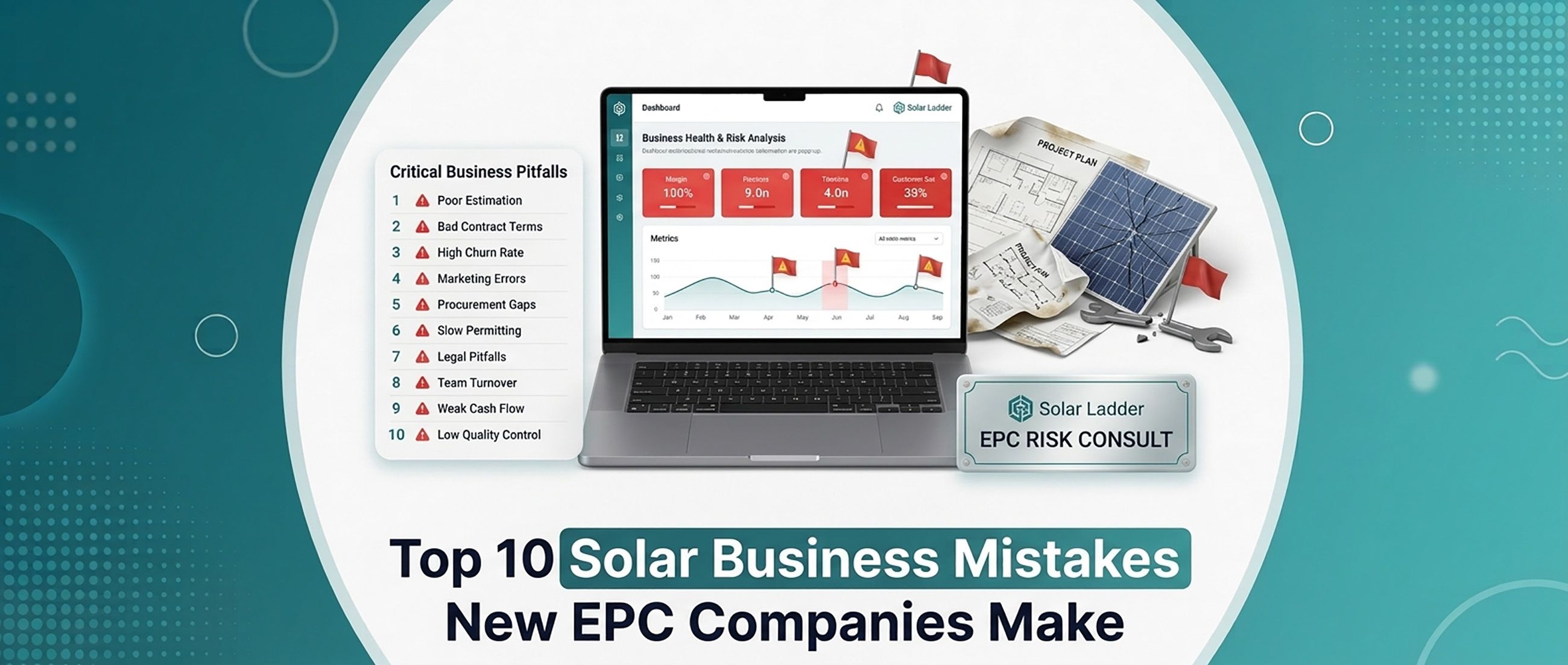
Top 10 Solar Business Mistakes New EPC Companies Make (And How to Avoid Them)
India's rooftop solar market is growing rapidly, creating tremendous opportunities for new Solar EPC companies. Falling equipment costs, increasing electricity prices, government support, and rising awareness have encouraged many entrepreneurs to enter the industry.
But while demand is increasing, competition is also becoming more intense.
Many new installers assume that technical knowledge alone is enough to build a successful business. In reality, long-term success depends just as much on sales, operations, customer experience, and business processes.
The good news? Most failures are avoidable.
Here are the ten biggest mistakes new Solar EPC companies make—and how you can avoid them.
1. Depending on WhatsApp and Excel to Run the Business
Almost every new installer starts with spreadsheets and WhatsApp groups.
Initially, this feels simple.
However, as enquiries increase, problems begin:
- Leads are forgotten.
- Customer documents are scattered.
- Team communication becomes confusing.
- Installation updates are difficult to track.
How to avoid it
Implement a solar CRM and project management platform from the beginning. Centralizing customer information reduces errors and prepares your business for growth.
2. Taking Too Long to Send Proposals
Customers often contact several installers before making a decision.
If your proposal takes three or four days while competitors respond within hours, you've already lost valuable momentum.
How to avoid it
Use software that creates professional 3D designs and branded proposals quickly. Faster response times increase trust and improve conversion rates.
3. Not Tracking Every Lead
Many new businesses rely on memory or handwritten notes.
Eventually:
- Follow-ups are missed.
- Duplicate enquiries appear.
- Sales opportunities disappear.
How to avoid it
Track every enquiry inside a CRM, regardless of whether it comes from Google Ads, Meta Ads, IndiaMART, referrals, exhibitions, or your website.
4. Competing Only on Price
Lowering prices may help win a few projects, but it often reduces profitability and creates unrealistic customer expectations.
Instead of competing on cost alone, differentiate through:
- Professional proposals.
- Faster service.
- Better communication.
- Strong warranties.
- Quality workmanship.
Customers buy confidence—not just cheaper solar panels.
5. Ignoring Customer Follow-Ups
Many customers need multiple interactions before making a purchase.
If your team follows up inconsistently, potential deals quietly disappear.
How to avoid it
Automate reminders and maintain a structured follow-up schedule that includes educational content, financing information, and project updates.
6. Weak Project Planning
Winning the order is only half the job.
Without proper planning, projects experience:
- Material shortages.
- Scheduling conflicts.
- Installation delays.
- Customer dissatisfaction.
How to avoid it
Adopt project management software that tracks milestones, responsibilities, and documentation from day one.
7. Forgetting About After-Sales Service
Many installers focus entirely on acquiring new customers.
However, referrals and repeat business come from satisfied existing customers.
How to avoid it
Offer preventive maintenance, remote monitoring, and regular performance reports. Excellent after-sales service builds long-term trust.
8. Not Measuring Business Performance
Without data, it's impossible to improve.
Many new EPC companies don't know:
- Which marketing channel performs best.
- Their proposal conversion rate.
- Average sales cycle.
- Installation turnaround time.
How to avoid it
Review business metrics weekly and use dashboards to monitor sales, operations, and project performance.
9. Delaying Technology Investments
Some businesses postpone investing in software because they want to "save money."
Ironically, manual processes often cost much more through:
- Lost leads.
- Slower proposals.
- Administrative work.
- Poor customer experience.
How to avoid it
Treat software as an investment that improves productivity and supports future growth.
10. Trying to Manage Everything Manually
Owners often attempt to handle sales, design, procurement, installations, customer support, and finance themselves.
Eventually, growth stalls.
How to avoid it
Create standardized workflows, delegate responsibilities, and use automation wherever possible.
Your business should rely on systems—not individuals.
How Solar Ladder Helps New Solar EPC Companies Grow Faster
Solar Ladder provides an integrated platform designed specifically for Solar EPC businesses, helping new companies establish professional processes from the very beginning.
👥 CRM & Lead Management
Manage enquiries from:
- Website
- Google Ads
- Meta Ads
- IndiaMART
- Referrals
- Exhibitions
Track customer history, automate reminders, and monitor your sales pipeline from one dashboard.
☀️ 3D Solar Design (Laptop & Mobile)
Create accurate designs for:
- RCC rooftops
- Metal sheet roofs
- Industrial sheds
Additional features include:
- Walkways
- Handrails
- Safety lifelines
- 360° visualization
Sales teams can design systems both in the office and on-site.
📄 Instant Proposal Generation
Generate professional proposals within minutes that include:
- 3D layouts
- Energy generation estimates
- ROI calculations
- Payback analysis
- Bill of Materials (BOM)
- Company branding
Respond faster and create a stronger first impression.
📋 Project Management
Track every project from order confirmation to installation.
Manage:
- Tasks
- Team assignments
- Material status
- Project milestones
- Documentation
- Customer updates
No more relying on disconnected spreadsheets.
🤖 Workflow Automation
Automate repetitive activities such as:
- Lead assignments
- Follow-up reminders
- Internal task creation
- Customer notifications
Reduce manual work and improve consistency.
📡 RMS (Remote Monitoring System)
Provide ongoing value through:
- Live plant monitoring
- Performance analytics
- Automated alerts
- Weekly generation reports
Stay connected with customers after installation.
🔧 O&M Management
Build recurring revenue through:
- AMC management
- Service scheduling
- Complaint tracking
- Technician assignments
- Maintenance history
Strong after-sales support creates long-term customer loyalty.
Best Practices for New Solar EPC Companies
- Invest in digital systems early.
- Standardize your sales process.
- Respond to enquiries quickly.
- Track every lead in a CRM.
- Generate professional proposals.
- Plan projects carefully before installation.
- Focus on customer experience—not just pricing.
- Monitor business KPIs regularly.
- Build a strong referral network.
- Deliver excellent after-sales service.
Conclusion
Starting a Solar EPC business is easier than ever—but building a successful one requires more than technical expertise.
The companies that grow consistently are those that combine strong sales processes, organized operations, efficient project management, and outstanding customer service.
Avoiding these common mistakes can help you reduce costs, win more projects, and create a business that scales sustainably.
With Solar Ladder, new Solar EPC companies gain access to CRM, Lead Management, 3D Solar Design, Instant Proposals, Project Management, Workflow Automation, RMS, and O&M—all within one integrated platform designed to support long-term growth.
Frequently Asked Questions
One of the biggest mistakes is managing operations through WhatsApp and Excel, which leads to missed leads, poor communication, and inefficient project execution.
Customers often compare multiple installers. Delivering a professional proposal quickly increases trust and improves your chances of winning the project.
A CRM centralizes lead information, tracks follow-ups, organizes customer interactions, and provides visibility into the sales pipeline.
Solar Ladder combines CRM, Lead Management, 3D Solar Design, Instant Proposals, Workflow Automation, Project Management, RMS, and O&M into one platform, helping new installers build efficient and scalable operations from day one.