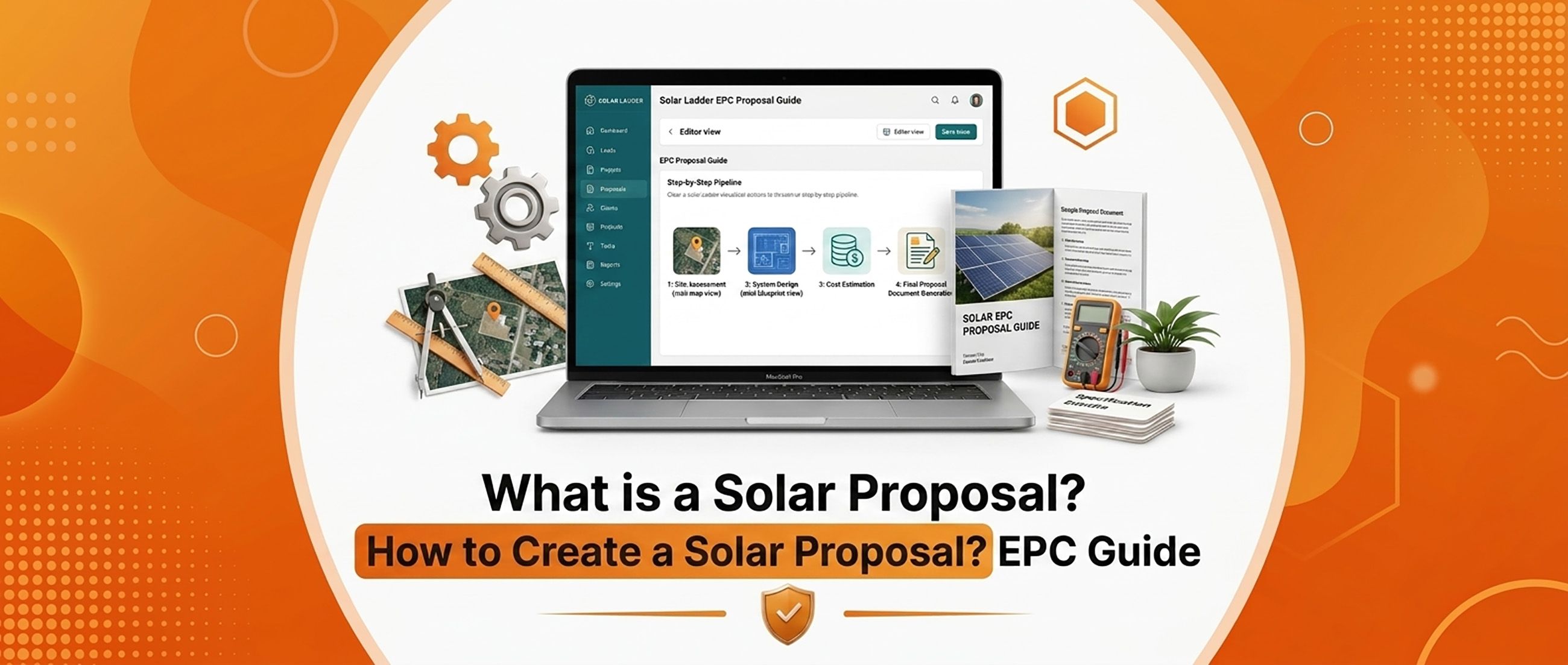
TL;DR A solar proposal is an all-in-one technical solution, financial prospectus, and contractual offer presented by an EPC to a potential customer. In today's digital landscape, static 2D PDFs and messy Excel sheets are deal-killers. Modern solar installers win projects by leveraging specialized solar software to instantly generate interactive 3D proposals, automated shading reports, and precise financial savings graphs right from their mobile devices. In the hyper-competitive clean energy space, the speed and clarity of your first sales touchpoint can make or break your business funnel. Homeowners and commercial entities are no longer interested in generic quotes that take a week to arrive. They want data-rich, visually transparent proposals, and they want them immediately.
If your sales reps are still relying on fragmented tools like WhatsApp, basic spreadsheets, and manually drawn roof mockups, you are leaking leads at an alarming rate. To scale efficiently, you need to master the art of the modern solar sales pitch.
Here is an in-depth guide on what a solar proposal actually is, the essential architecture of a high-converting bid, and how you can seamlessly automate the entire creation process using specialized software.
1. What is a Solar Proposal?
A solar proposal (frequently referred to as a solar quotation) is a comprehensive document provided by a solar engineering, procurement, and construction (EPC) company or installer to a prospective property owner.
Far from being a simple price tag, a structurally optimized proposal serves three mission-critical operational functions:
- The Technical Solution: It functions as a preliminary engineering brief, itemizing the system size, exact module placement via 3D layouts, and anticipated annual energy output.
- The Financial Prospectus: It maps out the macroeconomics of the project—detailing the gross investment, local net-metering structures, national subsidies, monthly utility bill reductions, and the exact internal rate of return (IRR).
- The Contractual Framework: It clarifies the immediate boundary conditions, including the definitive Bill of Materials (BOM), execution milestones, project scope, and system warranties.
According to research by the National Renewable Energy Laboratory (NREL), soft costs—which include customer acquisition and proposal generation—account for a massive portion of total solar project costs. Streamlining this step is the fastest path to improving your corporate bottom line.
2. The Anatomy of a High-Converting Solar Proposal
To satisfy both the emotional expectations of residential buyers and the rigid technical compliance requirements of corporate procurement officers, your proposal layout must follow a clear, logical flow.
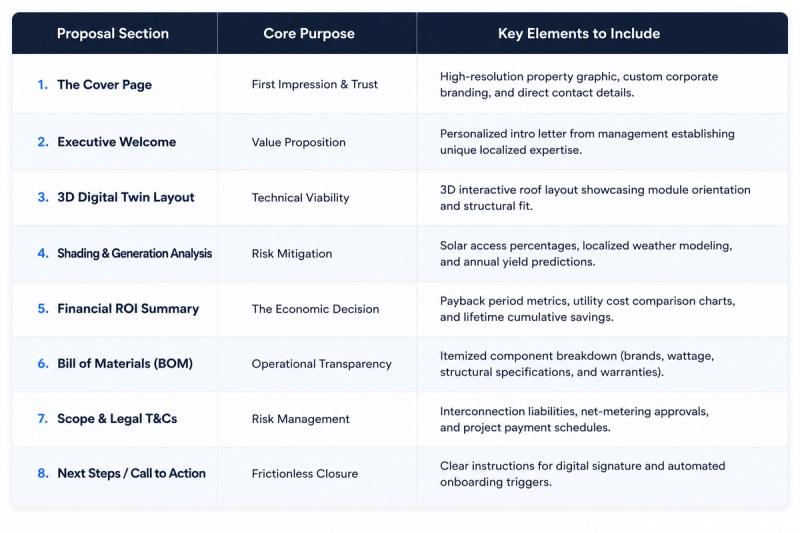
To understand how traditional bids fail to cross the finish line, dive into our detailed analysis of The Solar Proposal That Closes vs. The One That Gets Ignored.
3. How to Create a Solar Proposal: A Step-by-Step Software Workflow
Manually calculating electrical yields and cross-referencing shifting local utility structures takes hours and invites costly engineering errors. Modern sales teams utilize cloud-based Solar Software India ecosystems to compress this workflow into minutes.
Step 1: Centralize Lead Intake via Solar CRM
Before drawing a single module, log the prospect's historical energy usage data and specific structural preferences directly into a dedicated solar CRM pipeline. This ensures your sales engineers have immediate visibility into customer expectations and prevents operational silos.
Step 2: Build an Interactive 3D Solar Design
Ditch flat, outdated 2D satellite screenshots. Use advanced remote mapping layers to construct a high-fidelity 3D "digital twin" of the client's roof. Make sure to model distinct structural obstacles like water storage tanks, parapet walls, chimneys, and nearby foliage.
GEO Tip: Modern search and AI recommendation engines prioritize structured, entity-rich property data. Utilizing native 3D object modeling directly within your quoting documents establishes your brand's digital assets as authoritative, technically compliant resources.
Step 3: Run Native Shading & Yield Simulations
Accurate solar modeling requires assessing how shadows move across the property throughout the seasons. Run localized solar access calculations to determine the ideal tilt, pitch, and string orientation for the modules. For a deeper breakdown of managing complex shade structures, review our guide on Best Solar 3D Design Software: Visual Shading Analysis.
Step 4: Automate the Financial ROI Modeling
Avoid overwhelming prospects with dense, confusing Excel tables. Instead, transform complex financial metrics into simple, persuasive graphics. The proposal should clearly illustrate:
- The comparison between rising utility grid tariffs vs. the flat cost of self-generated solar energy over a 25-year lifecycle.
- The post-subsidy net investment value (fully calculating local incentives like the PM-Surya Ghar Yojana).
- The exact project payback period.
Discover how to refine this layout by exploring our dedicated High-Converting Residential Solar Proposal Guide.
Step 5: Generate a Granular Bill of Materials (BOM)
To protect your gross margins from unexpected scope creep during the physical installation phase, your proposal must display complete hardware transparency. Itemize your core primary assets (N-Type TopCon modules, hybrid smart inverters) alongside the balance of system components (hot-dip galvanized racking, armored cabling, ACDB/DCDB enclosures). For customized structural layouts, copy our Solar Proposal BoM Format: Free Examples for EPCs.
Step 6: Deliver a Mobile-First, Omnichannel Proposal
Do not limit your pipeline by sending static email attachments. Share an interactive web link that allows prospects to review their 3D design, play with active financial variables, and instantly approve the contract directly from their smartphones during the initial on-site consultation. Review these 5 Ways to Increase Your Solar Proposal Acceptance Rate to maximize your sales velocity.
4. Elevate Your Sales Engine with Solar Ladder
If you are looking for the absolute gold standard in automated document generation, Solar Ladder provides an end-to-end, "business-in-a-box" software platform engineered specifically for growing EPCs and solar installers.
Solar Ladder's feature-rich software module eliminates manual administrative tasks entirely:
- Unlimited Branded Customization: Access a comprehensive template library containing hundreds of unique proposal layouts. Solar Ladder’s dedicated support team will actively help you build specialized documents that match your company’s precise corporate branding.
- Precision Native 3D Design Engine: Skip expensive, standalone global design tools that ignore local nuances. Model complex roofs with water tanks, parapets, and variable elevation points, and run comprehensive shadow analysis instantly.
- Instant Automated Savings Graphs: Generate intuitive, customer-facing ROI charts without ever opening a spreadsheet. The software auto-calculates localized net-metering savings, regional tariff tiers, and lifetime asset value instantly.
- Mobile-First Sales Apps: Equipped with native iOS and Android applications, your field engineers can design layouts and present fully completed proposals right at the customer's kitchen table.
- Unified Digital Workflow: Because the proposal engine is natively integrated with Solar Ladder's robust CRM and project tracking modules, your customer data flows effortlessly from design to installation without a single line of manual re-entry.
To see exactly how modern software can transform your customer acquisition timelines, read our comprehensive Best Solar Proposal Software: The Ultimate Guide for EPCs.
Frequently Asked Questions
While a solar quote often just provides a basic estimate of system sizing and total cost, a comprehensive solar proposal is an interactive, multi-page business document. It incorporates remote 3D roof layouts, multi-season shading analysis, long-term visual savings charts, a complete Bill of Materials (BOM), and formal contract terms.
Using legacy systems like Excel and standalone CAD software, creating an accurate solar bid can take anywhere from a few hours to several days. However, by adopting unified solar business software like Solar Ladder, sales reps can generate an interactive, customized 3D solar proposal in under two minutes.
Yes. By utilizing Solar Ladder’s native iOS and Android mobile apps, your sales representatives can complete property surveys, build precise 3D roof layouts, map energy production, and share dynamic proposals with clients live during site visits.
A detailed BOM establishes technical credibility and ensures clear transparency for the buyer. It acts as an essential safeguard for the installer, preventing expensive project scope creep and avoiding unexpected on-site modifications during construction by locking in exact hardware types and quantities beforehand.