TL;DR
Material shortages and supply chain delays can disrupt solar EPC projects, increase installation costs, and reduce project profitability. When procurement teams rely on manual spreadsheets and disconnected site surveys, inaccurate Bills of Quantities (BOQs), delayed Balance of System (BOS) components, and idle installation crews become common challenges.
To prevent these issues, solar EPC companies should automate BOQ generation from 3D designs, synchronize purchasing with project milestones, track supplier lead times, maintain backup supplier networks, and centralize procurement and cost tracking. A structured procurement workflow helps teams coordinate material deliveries, reduce avoidable delays, and protect project margins.
Introduction
A solar installation rarely falls behind schedule because an engineer does not know how to mount panels or connect an inverter. More often, projects stall because essential components are delayed, mounting clamps are miscounted, or critical equipment becomes unavailable when the installation team needs it.
For Engineering, Procurement, and Construction (EPC) companies, procurement involves much more than purchasing solar panels and inverters. It requires coordinating site surveys, engineering designs, supplier availability, inventory, transportation, installation schedules, and project cash flow.
When these activities operate independently, even a small material shortage can delay installation, increase contractor costs, and affect customer commitments.
As solar EPC businesses scale, reactive purchasing becomes increasingly difficult to manage. The solution is to build a synchronized procurement process that connects engineering, purchasing, inventory management, and field execution.
This guide explains the common causes of solar procurement delays and four practical ways EPC companies can improve material planning, reduce supply chain bottlenecks, and maintain better control over project costs.
The Root Causes of Material Shortages in Solar Projects
Procurement failures are not always caused by suppliers. In many cases, they begin with fragmented handoffs between sales, site surveying, engineering, and purchasing.
Understanding these operational gaps is the first step toward preventing material shortages.
1. Manual BOQ Preparation and Calculation Errors
When sales and survey teams transfer roof layouts into static spreadsheets, discrepancies can occur between the designed system and the materials ordered.
Incorrect string configurations, underestimated cable lengths, or miscalculated mounting requirements can leave installation crews without essential components.
How to prevent it: Generate material quantities directly from finalized engineering designs wherever the software supports it. A design-linked Bill of Quantities (BOQ) reduces repetitive manual calculations and helps ensure purchase orders reflect the actual project layout.
Learn more in our guide on Why 3D Solar Design on Mobile Is Important for EPCs.
2. Poorly Coordinated Material Deliveries
Material availability is not just about whether components have been purchased. It is also about whether the right materials arrive at the right site at the right time.
Delivering solar modules and inverters weeks before a site is ready can create storage, security, and handling challenges. On the other hand, delaying structural components can leave installation crews waiting while other materials remain unused.
How to prevent it: Coordinate delivery schedules with engineering approvals, site readiness, installation milestones, and supplier lead times. This helps reduce premature deliveries and prevents critical materials from arriving after the scheduled installation date.
3. Overlooking Balance of System (BOS) Components
Solar panels and inverters often receive most of the procurement team's attention. However, smaller electrical and installation components can also hold up project completion.
Common examples include:
- DC combiner boxes and circuit breakers.
- UV-rated cable ties and conduits.
- Cable lugs, glands, and crimping accessories.
- Earthing components and copper tape.
- Surge protection devices (SPDs).
- Mounting clamps, fasteners, and other installation hardware.
A shortage of even a few required components can prevent electrical testing, commissioning, or final inspection from proceeding.
How to prevent it: Create standardized component checklists or installation kits based on system requirements. Verify the availability of smaller BOS items alongside major equipment instead of leaving them until the final wiring stage.
4. Supplier Volatility and Uncertain Lead Times
Solar EPC companies may face changing supplier delivery schedules, limited local inventory, transportation delays, and fluctuations in component availability.
Relying on a single supplier for a critical component can increase the impact of unexpected disruptions.
How to prevent it: Maintain relationships with qualified alternative suppliers, track historical delivery performance, and establish realistic lead-time buffers for critical materials. Procurement teams should identify potential supply risks before confirming installation schedules.
4 Rules for Effective Solar EPC Procurement Planning
A reliable procurement process connects engineering requirements, purchasing decisions, supplier coordination, and financial tracking.
Four core practices can help solar EPC companies prevent shortages and manage material costs more effectively.
1. Link Engineering Designs Directly to Procurement BOQs
Manual copy-pasting of component lists creates unnecessary opportunities for errors. When a roof layout changes, the corresponding material quantities must also be reviewed and updated.
For example, if an engineer modifies a solar layout to avoid a rooftop vent or other obstruction, the required mounting hardware and related material quantities may change.
A design-linked procurement workflow helps keep engineering and purchasing aligned.
How to implement it:
- Finalize the site survey and engineering design before preparing the purchase order.
- Generate an itemized Bill of Materials (BOM) or BOQ from the design where supported.
- Include relevant component quantities, mounting requirements, and equipment specifications.
- Recalculate material requirements whenever an approved design revision changes the layout.
- Verify the final quantities before releasing purchase orders.
This approach reduces duplicate data entry and helps procurement teams order materials based on actual project requirements rather than estimates from outdated documents.
Mobile 3D solar design tools can further simplify this workflow by allowing teams to capture site information and develop layouts during field visits.
2. Implement Stage-Gated Purchasing Tied to Project Cash Flow
Procurement planning must balance material availability with working capital. Purchasing every component too early can tie up cash reserves, while waiting too long can delay installation.
A milestone-based purchasing process helps EPC companies align procurement decisions with project progress and payment schedules.
Recommended procurement stages
Stage 1: Contract and advance confirmation
Review the approved project scope, payment terms, and expected installation schedule. Plan orders for long-lead items, such as PV modules, inverters, and transformers, according to supplier availability and the project's cash-flow position.
Stage 2: Civil and mechanical preparation
Coordinate mounting structures, foundation hardware, and related materials with site readiness and the installation plan.
Stage 3: Electrical installation and interconnection
Plan electrical BOS supplies and other remaining components in line with installation progress, testing requirements, and applicable utility approval procedures.
The precise purchasing sequence will vary according to project design, contract terms, supplier lead times, and local requirements.
For related guidance on billing and payment stages, read our Solar Plant Invoice Guide for Indian EPCs.
3. Build a Multi-Tiered Supplier Network with Lead-Time Buffers
A procurement strategy that depends entirely on one supplier can leave a project vulnerable when a critical component becomes unavailable.
Building a qualified supplier network gives purchasing teams more flexibility when deliveries are delayed or additional materials are needed.
Tier 1: Primary contracted suppliers
Use established suppliers for planned, high-volume purchases of major equipment and other critical components. Confirm pricing, expected delivery dates, product specifications, and applicable warranty terms.
Tier 2: Regional backup suppliers
Maintain relationships with qualified regional distributors or stockists who may be able to fulfil urgent requirements when primary deliveries are delayed.
Dynamic lead-time tracking
Monitor supplier delivery commitments and actual fulfilment performance. Use this information to adjust procurement schedules and identify components that require earlier ordering or additional contingency time.
Best practice: Avoid treating supplier lead times as fixed guarantees. Review delivery expectations regularly, particularly for components that could stop installation if unavailable.
4. Consolidate Procurement and Financial Tracking
Managing procurement through separate chat groups, spreadsheets, purchase orders, and billing files can make it difficult to understand the true material cost of each project.
When actual purchases are not compared with estimates, cost overruns may go unnoticed until project margins have already been affected.
A centralized tracking process helps EPC leadership monitor procurement alongside project progress and financial performance.
How to implement it:
- Maintain a central record of purchase orders and supplier commitments.
- Track material quantities ordered, received, issued, and remaining.
- Compare estimated material costs with actual procurement spending.
- Record delivery delays, substitutions, and additional purchases.
- Link material requirements to individual project milestones.
- Review budget variances before approving further purchases.
Dedicated solar management tools can help connect these activities with broader project workflows. Explore the topic in our guide to Solar Software India: The Complete Guide.
Reactive vs. Proactive Solar Procurement
The difference between reactive purchasing and proactive procurement lies in how early the team identifies material requirements and coordinates deliveries.
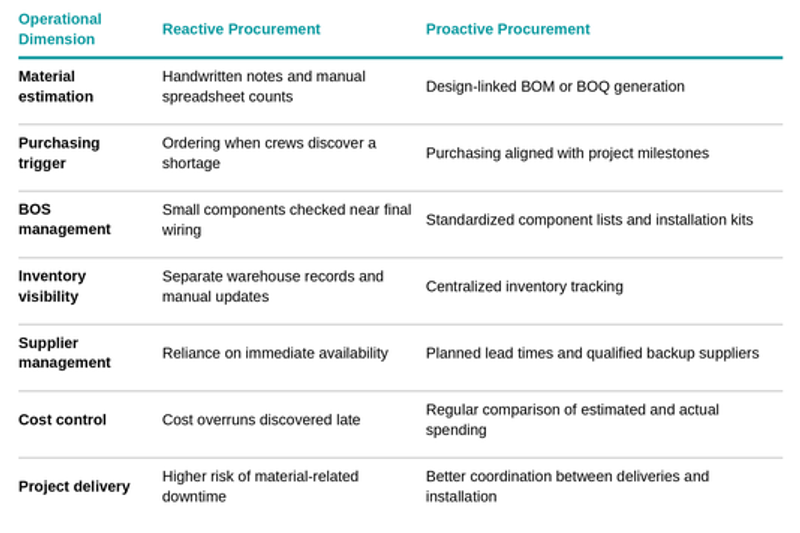
Moving toward proactive procurement does not eliminate every supply chain disruption. It gives teams earlier visibility into potential problems and more time to respond before those problems affect installation.
How Solar EPC Software Supports Procurement Planning
As the number of active projects grows, manually coordinating every material requirement becomes increasingly demanding.
A connected solar management workflow can help teams bring engineering data, procurement information, inventory records, and project schedules into a more consistent process.
Depending on the platform's capabilities, useful functions may include:
- Design-linked material calculations: Generate component quantities from finalized solar layouts.
- Centralized project records: Keep approved designs, material requirements, and purchase information accessible to relevant teams.
- Procurement and inventory tracking: Monitor orders, receipts, and material availability.
- Milestone-based coordination: Align material requirements with installation readiness and project progress.
- Cost visibility: Compare estimated and actual project expenditure.
For EPC companies, the objective is to reduce manual handoffs and make it easier to identify shortages, purchasing discrepancies, and schedule risks before they disrupt work on-site.
Conclusion: Build a More Predictable Solar Procurement Process
Effective solar EPC procurement planning is about more than securing competitive equipment prices. It requires ensuring that the correct materials are available in the right quantities, at the right location, and at the right stage of the installation.
Manual BOQ preparation, poorly coordinated deliveries, overlooked BOS components, and uncertain supplier lead times can all disrupt project execution. By linking engineering designs to material calculations, aligning purchasing with project milestones, maintaining qualified backup suppliers, and centralizing procurement and cost tracking, EPC companies can improve operational visibility.
A structured procurement workflow helps teams reduce avoidable shortages, make better use of installation crews, and protect project margins as the business grows.
The key is to move from reactive purchasing toward a connected, data-driven process that supports the entire solar project lifecycle.
Frequently Asked Questions
A Bill of Materials (BOM) is an itemized list of the components, materials, hardware, and parts required for a solar installation. A Bill of Quantities (BOQ) typically details the required quantities and may also include specifications, unit rates, labor, and cost information, depending on the project's estimating and tendering process.
The exact scope of each document can vary between organizations.
Material shortages can leave installation crews idle, increase contractor costs, and delay project completion. Urgent replacement purchases or expedited freight may also increase procurement expenses. Together, these costs can reduce the gross margin originally expected from a project.
Maintain standardized lists of electrical Balance of System components based on system design and project requirements. Where suitable, prepare installation kits containing commonly required cables, conduit fittings, labels, protection devices, and other accessories. Track inventory levels and verify kit completeness before materials are dispatched to a site.
Mobile 3D solar design software can help field teams capture roof dimensions and relevant site conditions while preparing a system layout. When the software supports design-linked BOM or BOQ generation, the resulting material list can reduce manual counting and help procurement teams prepare orders based on the approved design.
EPC companies can reduce exposure to supplier delays by tracking expected lead times, monitoring delivery performance, maintaining qualified backup suppliers, and ordering critical components according to project schedules. Procurement teams should also communicate potential delays to project managers early so installation plans can be adjusted